Abu Dhabi Vocational Education and Training Institute, widely known as ADVETI, is an important part of the UAE’s technical and vocational education landscape. The institute focuses on applied learning and career-oriented programmes designed to help students develop practical knowledge and skills relevant to the workplace.
Vocational education can provide an alternative pathway for students who want to combine academic learning with hands-on training. Instead of focusing only on theoretical study, vocational programmes can give learners opportunities to work with practical systems, technical processes and industry-related applications.
For students and families researching ADVETI, understanding its structure, programmes, qualifications, campuses and learning approach can make it easier to decide whether vocational education is the right pathway for a particular academic or career goal.
What Is Abu Dhabi Vocational Education and Training Institute?
The Abu Dhabi Vocational Education and Training Institute was established in 2007 as an initiative of the Abu Dhabi Government under the umbrella of the Abu Dhabi Centre for Technical and Vocational Education and Training, known as ACTVET.
ADVETI is focused on outcomes-based applied learning and provides programmes designed around the needs of the labour market. Its student handbook identifies study areas including business, accounting, project management, information technology, environment, health and safety, logistics, engineering, industrial technologies, media and laboratory technology. :contentReference[oaicite:0]{index=0}
This career-oriented approach makes vocational education particularly relevant to students who want to develop practical competencies alongside formal qualifications.
What Does ADVETI Stand For?
ADVETI stands for Abu Dhabi Vocational Education and Training Institute. The organisation operates within Abu Dhabi’s broader technical and vocational education framework and works through specialised institutes and educational entities.
The institute’s model is based on applied learning. This means students are expected to develop knowledge that can be used in practical situations rather than studying subjects only from a theoretical perspective.
This distinction is important when comparing vocational education with traditional academic pathways. Both can lead to valuable careers, but the teaching approach and learning outcomes can be different.
Why Vocational Education Matters in the UAE
Vocational education has an important role in developing a workforce with practical technical and professional skills. Industries such as engineering, logistics, information technology, business, healthcare support and industrial operations require employees who can apply knowledge in real-world environments.
Students who enjoy practical activities may find vocational education particularly engaging. Working with equipment, software, projects, technical processes or simulated workplace environments can make learning more directly connected to future employment.
Vocational education can also help students understand how their studies relate to actual jobs. Instead of choosing a career based only on theory, learners can gain exposure to practical responsibilities and industry expectations.
ADVETI Programs and Study Areas
The Abu Dhabi Vocational Education and Training Institute ADVETI offers applied programmes across multiple disciplines. The exact programme availability can vary by institute and academic cycle, so prospective students should always check the current official information before applying.
Business and Accounting
Business and accounting programmes can provide students with foundations in commercial operations, financial processes, administration and organisational activities.
These skills can be useful across many sectors because businesses of all sizes require people who understand financial information, business procedures and professional communication.
Information Technology
Information technology is another important area within vocational education. Students can develop practical digital skills that may support careers in technology-related environments.
Technology-focused learning can include computer systems, software applications and other digital skills depending on the programme. Students interested in the broader UAE technology education landscape can also explore computer education and training as part of their skills-development journey.
Engineering and Industrial Technology
Engineering and industrial technology programmes can be particularly relevant to students interested in technical careers. Applied learning gives students opportunities to understand processes, equipment and technical principles in a practical context.
This type of training can support industries where technical competence and workplace safety are essential.
Logistics
Logistics is another area connected with vocational education. The UAE’s position as a major commercial and transportation hub creates demand for skills related to supply chains, warehousing, transportation and business operations.
Students interested in logistics can benefit from learning how goods, information and resources move through complex operational systems.
Health and Safety
Health and safety knowledge is important across many workplaces, particularly industrial, construction, engineering and operational environments.
Training in this area can help students understand workplace risks, safety procedures and responsible professional practices.
Media and Laboratory Technology
ADVETI’s programme areas also include media and laboratory technology. These fields require different technical abilities, demonstrating the diversity of vocational education pathways available to students.
Media-related training can combine creativity with technology, while laboratory technology can require careful technical procedures, accuracy and scientific understanding.
ADVETI Qualifications
ADVETI’s student information identifies applied programmes at Certificate, Diploma and Advanced Diploma levels. These programmes are designed to provide outcomes-based learning and qualifications connected with the UAE’s national qualifications framework. :contentReference[oaicite:1]{index=1}
The level of qualification a student should pursue depends on academic background, career goals and the requirements of the intended profession. Students should review the current programme entry requirements before selecting a pathway.
A qualification should also be viewed as part of a broader learning journey. Some students may use vocational education to prepare directly for employment, while others may continue into higher-level study.
Abu Dhabi Vocational Education & Training Institute and Practical Learning
One of the defining characteristics of vocational education is its emphasis on practical application. Students are expected to understand how concepts work in real environments and develop competencies that can be transferred to professional settings.
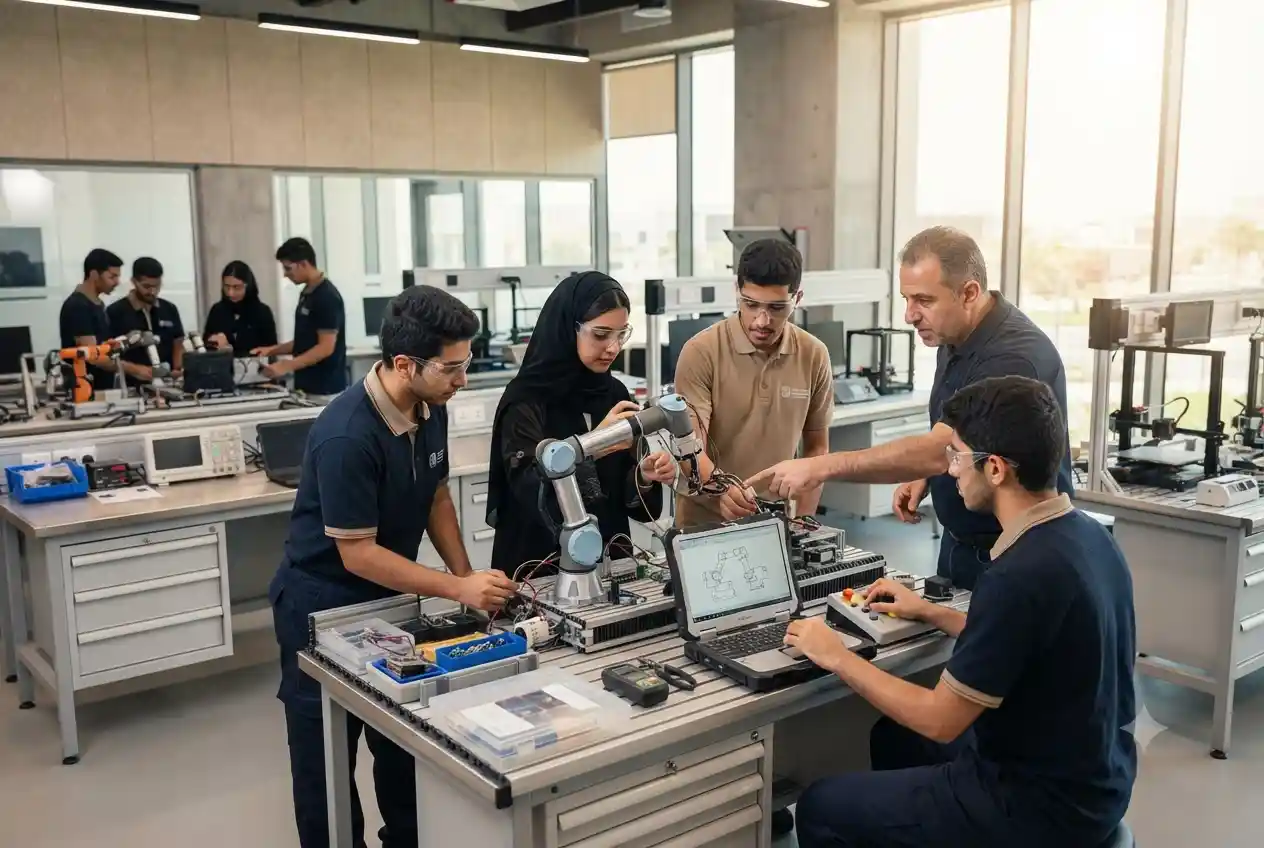
Practical learning can involve workshops, laboratories, technology, projects, simulations and other forms of applied education depending on the programme.
This approach can be particularly beneficial for students who learn more effectively through doing. Instead of spending the entire lesson listening to explanations, learners may have opportunities to apply information and evaluate their own results.
ADVETI Campuses and Educational Entities
ADVETI operates through several educational entities and campuses. The institute’s student handbook identifies Al Jazirah Institute of Science and Technology, including Abu Dhabi and Shahama campuses, as well as Al Jaheli Institute of Science and Technology in Al Ain and Baynounah Institute of Science and Technology in Al Dhafra. :contentReference[oaicite:2]{index=2}
The wider ADVETI structure also includes Secondary Technical Schools and the Vocational Education Development Centre. This network allows vocational and technical education to serve students at different stages of their educational journey.
Abu Dhabi Vocational Education and Training Institute Address
Students searching for the Abu Dhabi Vocational Education and Training Institute address should first identify the specific campus or institute associated with their programme. ADVETI operates across multiple locations, so there is not necessarily one address that applies to every programme.
This is particularly important for applicants who are comparing Abu Dhabi, Shahama, Al Ain or Al Dhafra options. The campus location can affect daily transportation, programme availability and the learning environment.
Applicants should verify the current address and contact details through the official ADVETI information before visiting or submitting documents.
Who Can Benefit From ADVETI?
Vocational education can suit different types of learners. Students who prefer practical learning may find it more engaging than a purely theoretical programme.
It can also be relevant to students who already have a particular career area in mind. Someone interested in engineering, IT, logistics or business can choose a pathway that introduces practical skills connected with that sector.
Students should nevertheless consider their long-term goals before selecting a programme. Some careers require university degrees or specific professional qualifications, while others place greater emphasis on technical training and workplace competencies.
Vocational Education Versus Traditional Academic Education
Vocational and academic education should not be viewed as competing systems where one is automatically better. They serve different learning preferences and career objectives.
Traditional academic programmes often emphasise theoretical knowledge, research and broad subject study. Vocational programmes typically place greater emphasis on practical competencies and workplace application.
A student interested in engineering, for example, may eventually need both theoretical knowledge and practical experience. The appropriate pathway depends on the student’s intended career and the qualifications required for that profession.
ADVETI and Career Preparation
Career preparation is a central reason why students consider vocational education. Applied programmes can help learners develop skills that are directly relevant to workplace activities.
Students can also benefit from learning professional habits such as following procedures, meeting deadlines, working safely, communicating with colleagues and solving practical problems.
These transferable skills can be valuable even when a graduate later changes industries. Employers often look for people who can learn new processes and apply knowledge responsibly.
How Parents Can Evaluate ADVETI Programs
Parents supporting a student should begin by understanding the child’s interests and strengths. A student who enjoys practical technical work may be well suited to vocational education, while another may prefer a more academic pathway.
Parents should then examine the specific programme rather than evaluating ADVETI only as a general institution. Important questions include:
- What subjects are covered?
- What qualification is awarded?
- What are the entry requirements?
- How much practical learning is included?
- Where is the programme delivered?
- What progression opportunities are available?
- What careers are connected with the qualification?
- Are there industry-related learning opportunities?
Getting clear answers to these questions can help families make a more informed decision.
ADVETI and Future Skills
Vocational education is increasingly relevant to discussions about future skills. Technology, automation and changing workplace processes mean that employees need to combine technical knowledge with adaptability.
Students may need to understand digital systems, analyse problems, communicate clearly and learn new tools throughout their careers. Applied education can provide an environment where these skills are developed through practical activities.
This also connects with broader changes in UAE education, where schools and training institutions are increasingly focusing on practical skills, technology and career readiness.
How Students Can Get More From Vocational Training
Students should approach vocational education as an opportunity to develop genuine capability rather than simply earn a certificate.
Regular practice is essential. Learners should use workshops, laboratories, software and projects as opportunities to improve their skills and understand how concepts work in practice.
Students should also ask questions and seek feedback. Mistakes are part of practical learning, and identifying why something went wrong can be more valuable than simply completing an assignment.
Maintaining a record of projects and practical achievements can also help students demonstrate their capabilities when applying for further education or employment.
Checking Current ADVETI Information
Programme names, entry requirements, campuses and schedules can change, so prospective students should verify current information before making educational decisions.
The institute’s published student information confirms ADVETI’s role within Abu Dhabi’s technical and vocational education system and provides an overview of its educational entities and applied programmes. :contentReference[oaicite:3]{index=3}
Students should also confirm whether a specific qualification is suitable for their intended university, employer or professional pathway before enrolling.
The Bottom Line
Abu Dhabi Vocational Education and Training Institute provides an important pathway for students who want to combine education with practical and career-focused learning. Through its institutes and educational entities, ADVETI covers areas such as business, accounting, IT, logistics, engineering, industrial technology, health and safety, media and laboratory technology.
The institute’s focus on applied learning can be particularly useful for students who prefer practical education or already have an interest in a specific career field. Certificate, Diploma and Advanced Diploma pathways also provide different levels of study depending on the learner’s goals.
Before applying, students and families should check the current programme details, entry requirements, campus location and progression opportunities. With the right programme choice, vocational education can provide a strong foundation for further study, employment and long-term career development.