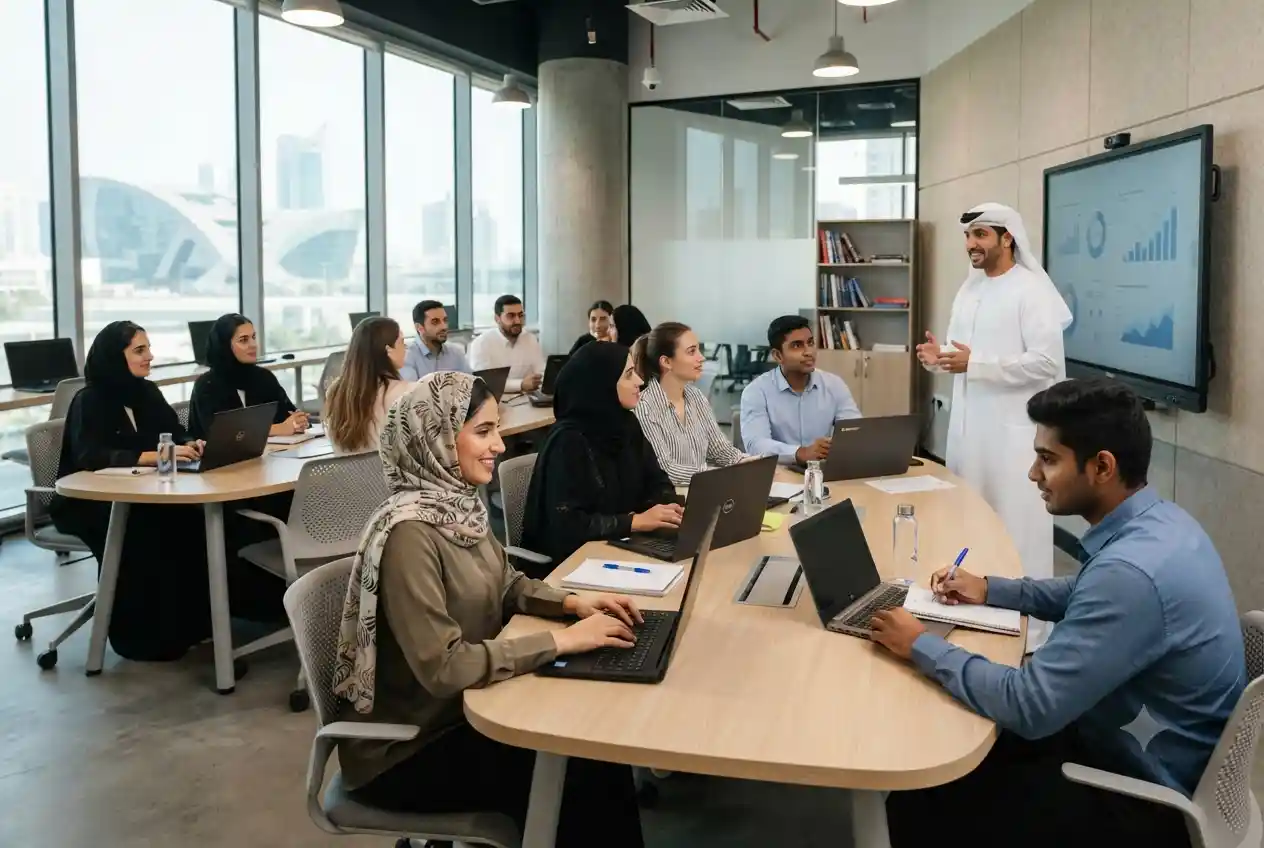
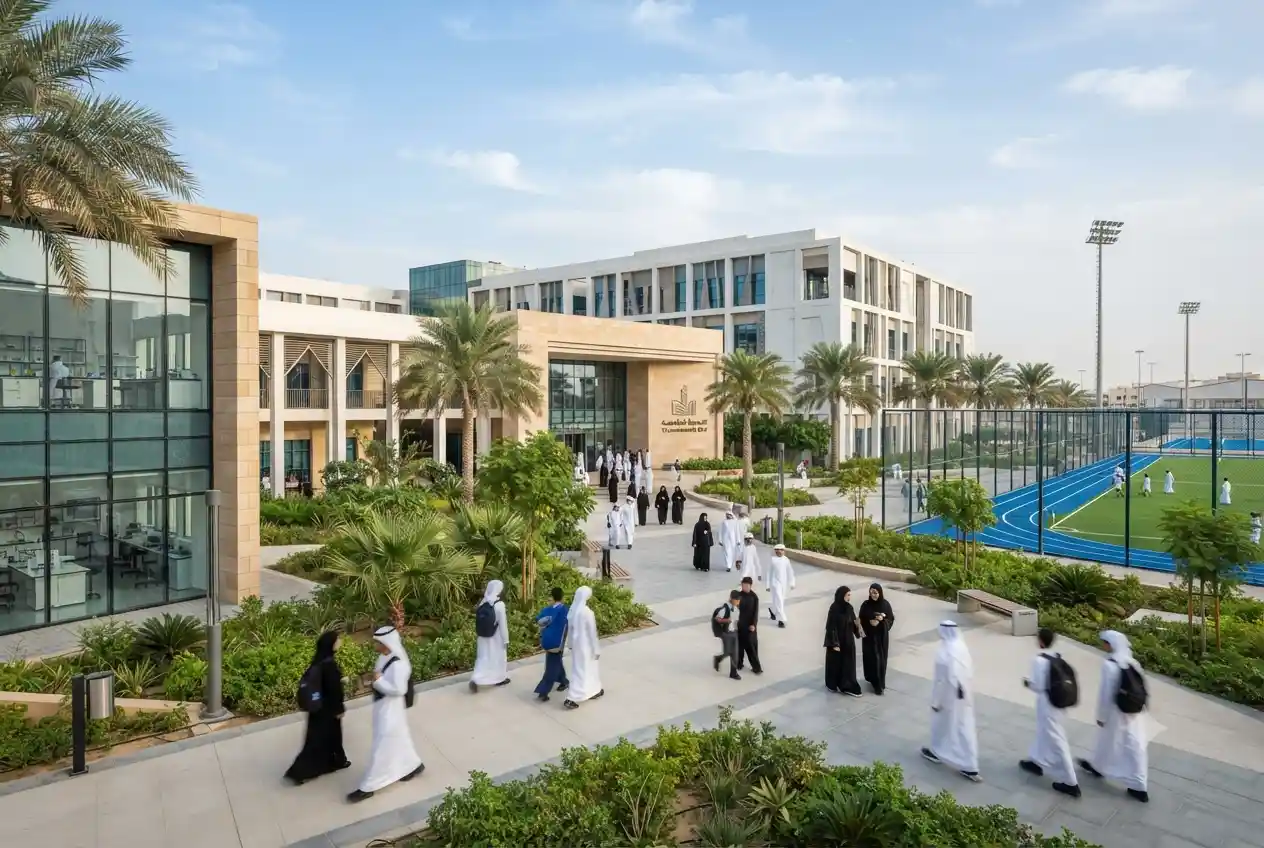
Zayed Educational Complex is part of a major UAE government initiative designed to develop modern public-school infrastructure and provide students with advanced learning environments. The project brings together academic education, technology, practical learning, sports, arts and community-focused activities within large, purpose-built campuses.
The initiative has expanded across several emirates, including Sharjah, Dubai, Fujairah, Ras Al Khaimah and Ajman. Rather than treating a school simply as a collection of classrooms, the educational complex model is designed around a broader learning environment where students can study, experiment, participate in activities and develop practical skills.
For families researching government education in the UAE, understanding the Zayed Educational Complex project provides useful insight into how public schools are being developed for current and future generations.
What Is the Zayed Educational Complex?
The Zayed Educational Complex project is a national initiative focused on developing advanced public educational facilities across the UAE. The complexes are named in honour of the UAE’s Founding Father, Sheikh Zayed bin Sultan Al Nahyan, reflecting the country’s emphasis on education as a foundation for national development.
The first phase included 11 new educational complexes launched in 2023. According to UAE government information, the facilities were designed to accommodate more than 28,000 students collectively and include modern laboratories, sports facilities, arts spaces, green areas and smart technologies. :contentReference[oaicite:0]{index=0}
The scale of the project distinguishes these complexes from conventional school buildings. Each facility is designed to support a broad range of educational and extracurricular activities, creating an environment intended to prepare students for changing academic and professional demands.
Zayed Educational Complex Sharjah
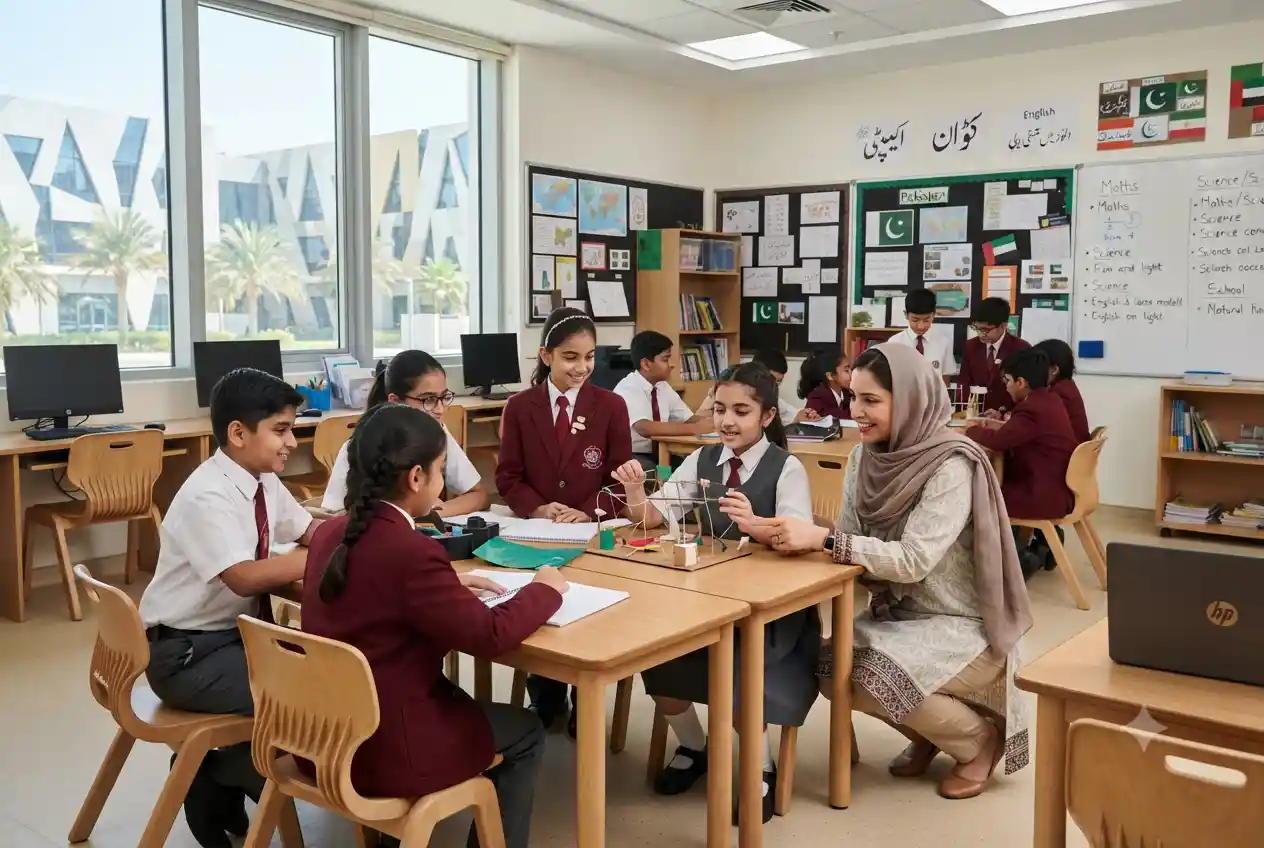
The Zayed Educational Complex Sharjah is located in the Al Suyoh area and has become an important educational facility for the surrounding community. The complex brings together different stages of education within a modern campus.
Project information for the Al Suyoh campus describes it as a joint school covering kindergarten, first cycle, second cycle and third cycle education. The facility was designed to serve approximately 2,500 students and more than 150 staff and administrators. :contentReference[oaicite:1]{index=1}
The Sharjah complex also reflects the wider objectives of the Zayed Educational Complex programme, particularly the integration of modern technology, practical learning and facilities that support student development.
Recent community engagement has also highlighted the role of the complex beyond classroom teaching. In 2025, the Sharjah Parents Council visited the Al Suyoh complex to strengthen communication between parents, school administration, teachers and students. :contentReference[oaicite:2]{index=2}
Modern Facilities at Zayed Educational Complexes
One of the most notable features of the project is its focus on comprehensive educational facilities. Students can benefit from spaces designed for different types of learning rather than relying exclusively on standard classrooms.
Advanced Laboratories
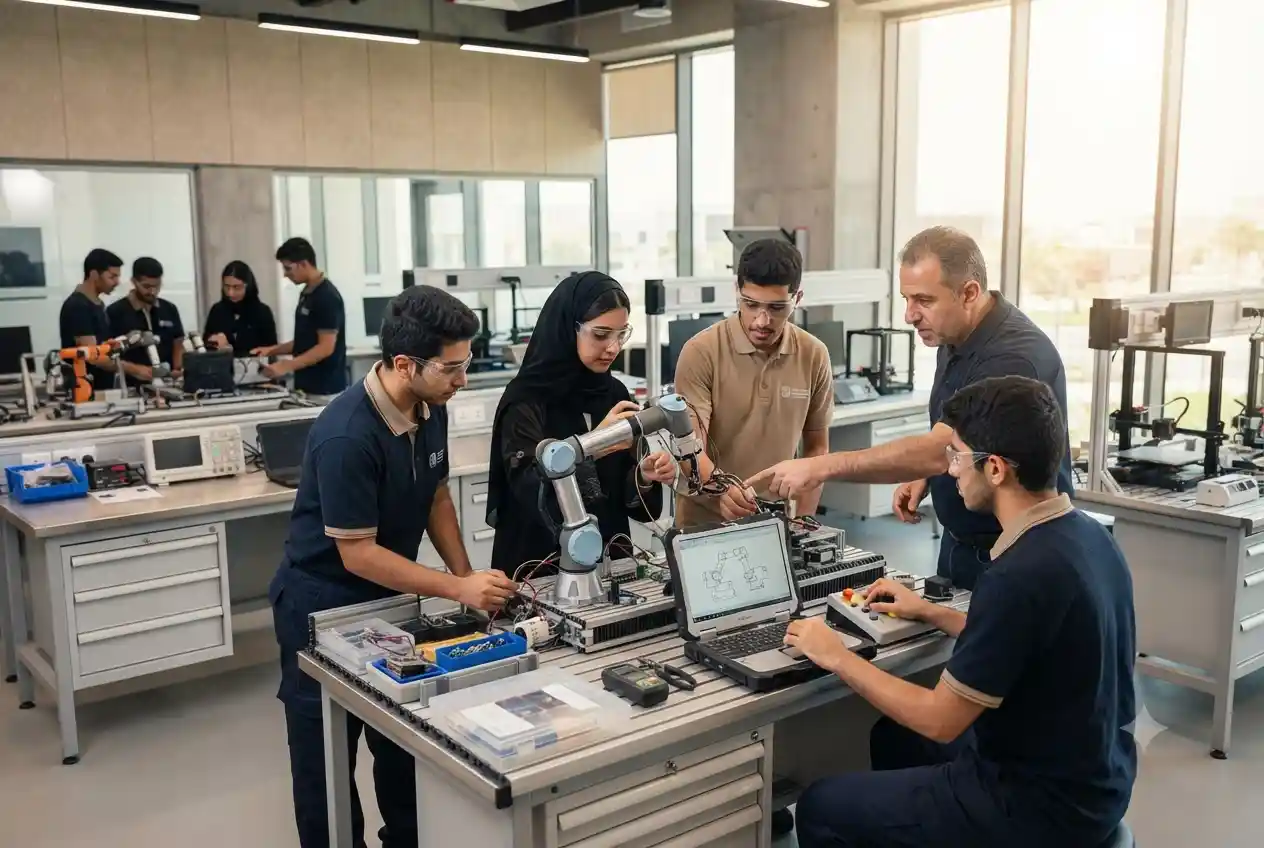
Science and technology laboratories provide opportunities for students to move beyond theoretical learning. Practical experiments can help students understand scientific principles through observation, testing and analysis.
Some of the newer complexes also include specialised facilities such as FabLabs, media laboratories, nutrition laboratories and computer laboratories. These spaces support a wider range of practical and technical learning activities. :contentReference[oaicite:3]{index=3}
Sports Facilities
Physical activity forms another important part of the complex model. Modern sports facilities provide students with opportunities to participate in organised physical activities and develop teamwork, discipline and healthy habits.
Reports about the wider project have highlighted facilities including swimming pools, sports courts and multipurpose indoor spaces. :contentReference[oaicite:4]{index=4}
Arts and Creative Spaces
Education is not limited to science and technology. Arts facilities allow students to explore creativity, performance and communication.
The inclusion of arts spaces within large educational complexes supports a more balanced approach to education, where students can develop academic abilities alongside creative and interpersonal skills.
Green and Sustainable Spaces
Sustainability is another feature associated with the new educational complexes. The project includes green areas and incorporates sustainability considerations into school design.
These features can also provide opportunities for students to understand environmental responsibility through their everyday surroundings. A sustainable school environment can become an educational resource in itself.
Technology in the Zayed Educational Complex
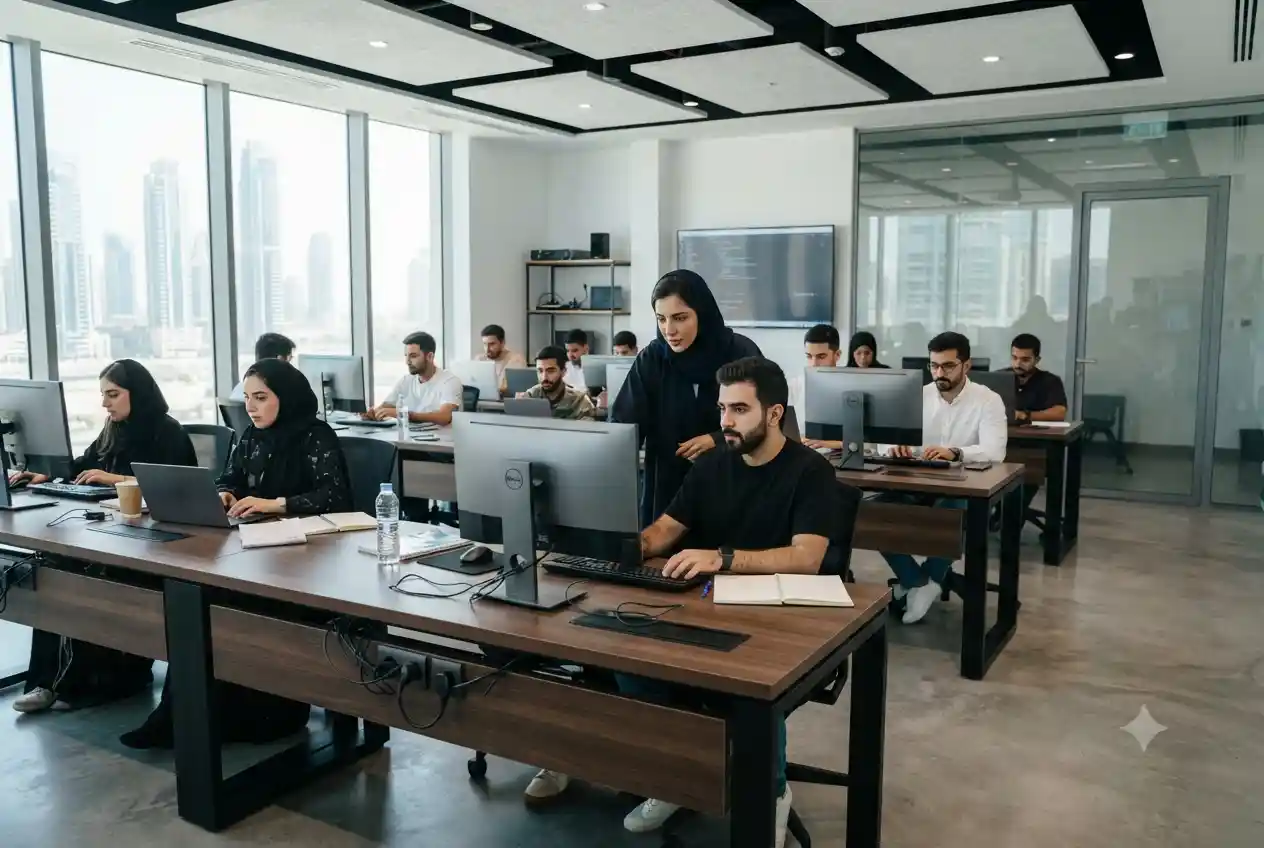
Technology is central to the design of modern Zayed Educational Complexes. The facilities are intended to support digital learning and provide students with access to tools that reflect the changing requirements of education and employment.
Reports on the complexes have highlighted the use of advanced technology in areas such as attendance management and educational facilities. The Sharjah complex, for example, has been described as having advanced laboratories and technology-supported learning spaces. :contentReference[oaicite:5]{index=5}
However, technology is most useful when it supports clear educational objectives. Computers, smart systems and digital resources should help students research, create, experiment, communicate or solve problems rather than simply provide additional screens.
This approach is closely connected with the broader development of STEM education in Dubai, where technology is combined with science, engineering and mathematics to develop practical problem-solving skills.
Holistic Education at Zayed Educational Complexes
The Zayed Educational Complex model places emphasis on holistic development. This means that academic achievement is considered alongside personal development, creativity, physical activity, national identity and community engagement.
During a 2025 visit to the Zayed Educational Complex in Al Warqaa, Sheikh Mohammed bin Rashid Al Maktoum highlighted an integrated learning environment that combines academic excellence with national values, creativity, physical activity, reading and community engagement. :contentReference[oaicite:6]{index=6}
This approach reflects a broader understanding of what students need to succeed. Strong academic knowledge remains essential, but students also need communication, confidence, teamwork, creativity and the ability to apply what they learn.
Practical Learning and Future Skills
Modern educational facilities can make it easier for schools to introduce practical learning into the curriculum. Laboratories, computer rooms, workshops and creative spaces allow students to experience concepts rather than simply reading about them.
A science lesson, for example, can include an experiment. A technology lesson can involve programming or digital design. An engineering activity can require students to create and test a prototype.
These experiences can encourage students to ask questions, investigate problems and improve their ideas. Such skills are useful across higher education and professional careers.
Zayed Educational Complex and Student Development
Student development extends beyond academic subjects. Schools need to help young people build the confidence and social skills required to work with others and participate constructively in their communities.
Educational complexes can support this through clubs, sports, cultural activities, creative projects and community programmes. These activities give students opportunities to practise leadership, cooperation and communication in different environments.
The approach can also help students discover interests that may eventually influence their higher education choices. A student who enjoys technology projects may become interested in engineering or computer science, while another who enjoys creative activities may explore design, media or the arts.
Zayed Educational Complex Sharjah and Community Engagement
The Sharjah complex has also been involved in educational and cultural activities outside regular classroom lessons. In January 2026, students from the Zayed Educational Complex visited the Al Sidra Heritage District in Khorfakkan, where they participated in heritage activities and interactive workshops focused on traditional crafts. :contentReference[oaicite:7]{index=7}
Activities of this kind demonstrate how education can connect classroom learning with the wider community. Students can develop an understanding of national culture and heritage through direct experiences rather than relying entirely on textbooks.
Community engagement can also help students understand that education has a social purpose. Knowledge and skills can contribute to preserving culture, solving community problems and supporting the country’s future development.
Locations of Zayed Educational Complexes
The Zayed Educational Complex initiative is not limited to one emirate. The project has expanded across several parts of the UAE to support public education infrastructure in growing communities.
By late 2024, reports identified multiple existing branches in Dubai, Fujairah, Ras Al Khaimah, Sharjah and Ajman, with an additional complex planned for Umm Al Quwain. :contentReference[oaicite:8]{index=8}
The expansion demonstrates the national scale of the initiative. Individual campuses may differ in location, capacity and facilities, but they form part of the same broader effort to modernise public-school infrastructure.
What Makes the Zayed Educational Complex Different?
The main difference is the scale and breadth of the facilities. Instead of focusing only on conventional classrooms, the complexes are designed as integrated educational environments.
A student may move between classrooms, laboratories, sports facilities, creative spaces and technology areas depending on the day’s activities. This creates opportunities for learning through different methods and experiences.
The larger campus model can also support a greater variety of programmes. Students with different interests can participate in academic, technical, sporting and creative activities within the same overall educational environment.
Benefits for Students
The Zayed Educational Complex model can provide several potential benefits for students.
- Access to modern learning facilities.
- Greater opportunities for practical and experimental learning.
- Technology-supported education.
- Dedicated spaces for sports and physical activity.
- Opportunities for creative and artistic development.
- Exposure to sustainability and environmental concepts.
- Activities that support teamwork and communication.
- Learning experiences connected with national identity and community.
The effectiveness of these facilities ultimately depends on how they are used by educators. A modern building can support excellent education, but strong teaching and meaningful student engagement remain essential.
What Parents Should Know
Parents considering a government school within the Zayed Educational Complex network should check the current information for the specific campus serving their area. Facilities, admissions procedures, grade availability and transportation arrangements can differ between locations.
Parents should also consider the child’s individual learning needs. A school may have excellent facilities but still need to be evaluated in terms of academic programmes, student support, extracurricular opportunities and communication with families.
Visiting a school when possible can help parents understand the environment. Questions about curriculum, activities, transportation, student services and daily routines can provide a more complete picture than a general description of the complex project.
The Future of Public Education in the UAE
The Zayed Educational Complex project illustrates the UAE’s broader focus on developing education infrastructure for future generations. Large campuses, advanced technology, specialised laboratories and sustainability features are designed to support a changing educational landscape.
Future-ready education will require students to combine academic knowledge with practical skills. They will need to work with technology, communicate effectively, analyse information, solve problems and adapt to new situations.
Modern school facilities can create the environment for these abilities to develop, especially when teachers use them to support project-based and practical learning.
Overall Takeaway
Zayed Educational Complex represents a significant development in UAE public education infrastructure, bringing modern facilities, technology, practical learning and extracurricular opportunities together within large school campuses.
The Zayed Educational Complex Sharjah in Al Suyoh is one example of how this model is being implemented across the country. Its laboratories, technology facilities, sports spaces and community activities reflect a broader approach to student development.
For families, the most important consideration remains the quality of the complete educational experience. Modern facilities provide valuable opportunities, but effective teaching, student support, family engagement and meaningful learning activities are what ultimately turn those facilities into educational value.