
Ministry of Education homeschooling is an important consideration for families in the UAE who are exploring alternatives to conventional school attendance. Homeschooling can provide families with greater flexibility over learning schedules, teaching methods and educational resources, but it also requires careful planning to ensure that a child’s education remains structured and appropriate.
For families considering homeschooling in the UAE, one of the first steps is understanding the difference between educating a child at home and following an officially recognised educational pathway. Parents should not assume that every home-learning arrangement has the same legal or academic status. Requirements can depend on the child’s circumstances, the emirate involved and the educational pathway selected.
The UAE has a diverse education sector that includes government schools, private schools, international curricula, vocational pathways and higher education institutions. Families considering home-based learning should therefore look carefully at how their chosen approach fits into the wider education system.
What Does Homeschooling Mean in the UAE?
Homeschooling generally refers to an educational arrangement in which parents or guardians take a central role in organising and delivering a child’s learning outside a conventional full-time school environment. Lessons may be delivered by parents, tutors, online educators or a combination of different resources.
The approach can vary significantly from one family to another. Some parents follow a structured curriculum with regular lessons and assessments, while others use project-based learning, online resources and practical activities. The important consideration is whether the chosen arrangement provides children with consistent educational development and meets any applicable requirements.
Parents should also distinguish homeschooling from distance learning offered by a recognised school. In distance learning, the student remains enrolled with an educational institution that normally provides the curriculum, assessment and academic framework. Homeschooling places considerably more responsibility on the family.
Does the Ministry of Education Regulate Homeschooling?
Families searching for ministry of education homeschooling information should begin with official UAE education authorities rather than relying entirely on social media posts, forums or informal advice. Education policies and procedures can change, and requirements may differ according to the specific circumstances of a student.
The UAE Ministry of Education provides information about the country’s education system, curricula, educational services and related policies. Parents should use official government sources when checking current requirements and should confirm any specific homeschooling arrangements with the relevant education authority.
UAE Ministry of Education is the appropriate starting point for checking current official information about education services and policies.
Families living in an emirate with its own education authority should also check the relevant local authority where applicable. This is particularly important because education administration in the UAE involves both federal and local institutions.
Why Families Consider Homeschooling
There is no single reason why parents choose home-based education. Families may be attracted by flexibility, individualised instruction or the ability to create a learning environment that better suits a child’s circumstances.
Flexible Scheduling
One potential advantage is flexibility. Families may be able to organise learning around travel, extracurricular activities, family commitments or other circumstances. Instead of following a fixed school timetable, parents can create a schedule that works for their household.
Individualised Learning
Children do not all learn at the same pace. A home-based programme can allow parents to spend more time on subjects that require additional attention while allowing a child to progress more quickly in areas where they are already confident.
Different Learning Methods
Homeschooling can incorporate textbooks, online lessons, educational software, experiments, reading programmes, practical projects and field-based learning. Parents can combine different resources rather than depending on one classroom model.
Family Involvement
Parents have a direct view of their child’s progress and can become closely involved in the learning process. This can make it easier to identify strengths, difficulties and changing interests.
Planning a Homeschooling Programme
A successful homeschooling arrangement requires more than purchasing books or subscribing to an online learning platform. Parents should create a clear academic structure before beginning.
The first step is to establish learning objectives. These should cover core academic areas while also leaving room for creative, physical and practical activities. A weekly timetable can then provide consistency without making the home environment feel identical to a traditional classroom.
Parents should also decide how progress will be measured. Depending on the educational pathway, this may involve assignments, quizzes, projects, examinations or other forms of assessment. Keeping organised records can be especially useful when a child later transfers into a formal school or applies for another educational programme.
Choosing a Curriculum
Curriculum selection is one of the most important decisions for a homeschooling family. The UAE includes students following different curricula, including national and international programmes. Parents should consider the child’s age, future educational goals and any requirements associated with the qualification they eventually want to pursue.
A curriculum should be sufficiently broad to develop literacy, numeracy, scientific understanding, communication and critical thinking. It should also provide a progression from one level to the next rather than treating each school year as an isolated collection of lessons.
Parents who want to prepare children for international examinations should check the exact requirements of the relevant examination board. Similarly, families expecting a child to enter a UAE school later should investigate whether their home-learning records and previous studies will be accepted by the institution.
Technology and Homeschooling
Technology has expanded the resources available to families learning at home. Students can access digital books, recorded lessons, interactive exercises, educational applications, virtual laboratories and collaborative tools.
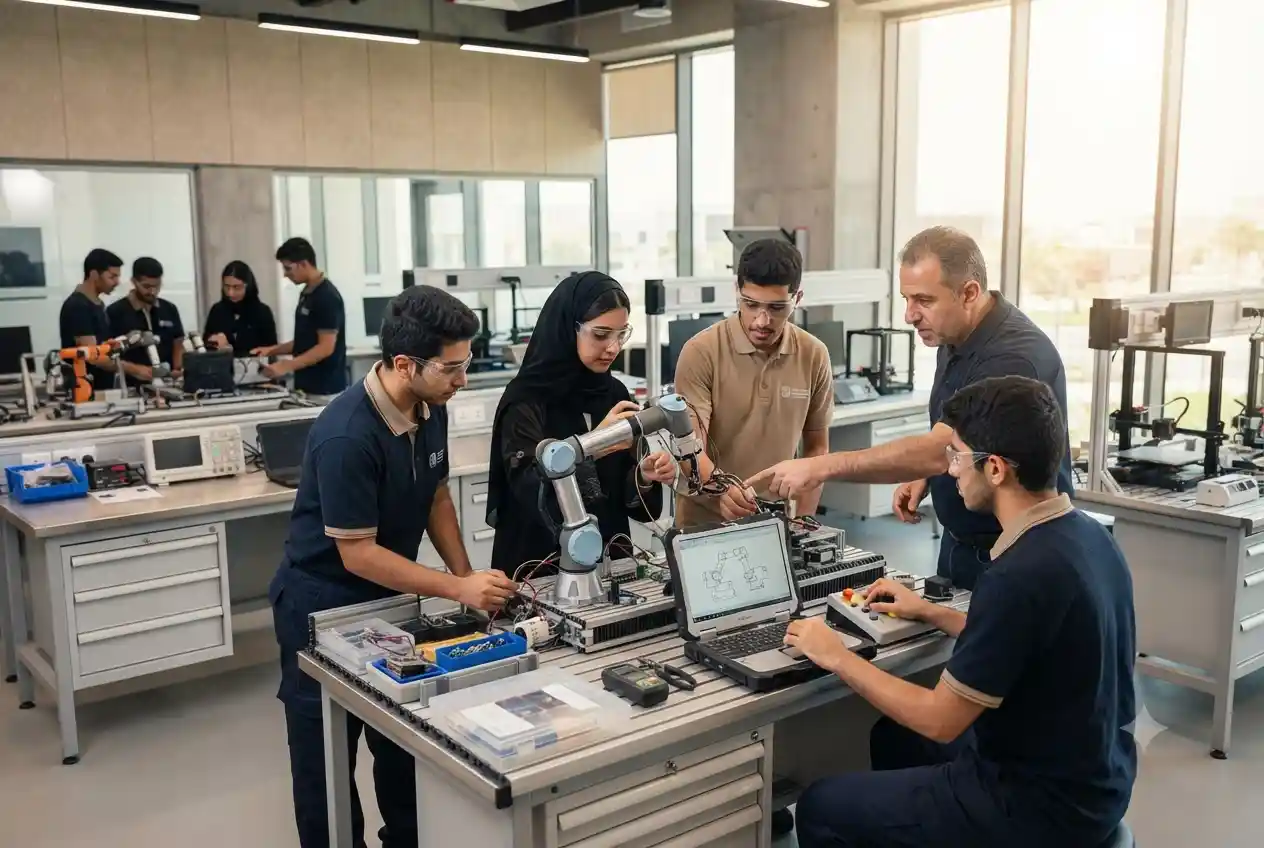
Technology can be particularly useful when studying subjects that benefit from visualisation or experimentation. For example, students can use simulations to explore scientific concepts or digital design tools to develop technical projects. Families interested in modern learning approaches can also explore how STEM education in Dubai connects technology with science, engineering and mathematics.
However, digital learning should not become the entire educational experience. Children still need reading, writing, discussion, practical activities, physical exercise, creative work and opportunities to interact with other people.
Social Development and Homeschooling
One common concern about homeschooling is social interaction. School naturally provides children with daily opportunities to communicate with classmates, participate in group activities and develop relationships outside the immediate family.
Families using home education therefore need to think intentionally about social opportunities. Sports clubs, community activities, educational workshops, libraries, supervised group projects and extracurricular programmes can provide children with opportunities to interact with peers.
Social development should not be treated as an optional extra. Communication, cooperation, conflict resolution and teamwork are important parts of a child’s overall development.
Can Homeschooling Provide Free Education in the UAE?
Families searching for free education in UAE for foreigners should first clarify what they mean by free education. The UAE education system includes government and private institutions, and eligibility for publicly funded education can depend on nationality, residency status, school type and other applicable conditions.
Homeschooling also has its own costs even when parents do not pay traditional school tuition. Families may need to budget for curriculum materials, books, devices, internet access, tutoring, examinations, educational activities and other resources.
For this reason, homeschooling should not automatically be considered a free alternative to school. A realistic budget should include both essential academic resources and the costs associated with assessment or recognised qualifications where applicable.
Homeschooling for Different Age Groups
The practical requirements of homeschooling can change considerably as children grow older.
Early Years
For younger children, learning can focus heavily on language development, early mathematics, reading, creativity, physical activity and exploration. Parents can use play and practical experiences to introduce academic concepts without relying exclusively on formal worksheets.
Primary Years
As children progress through primary education, structured literacy, mathematics, science and social studies become increasingly important. A consistent timetable can help children develop independent study habits.
Secondary Years
Older students require more specialised subject planning. Parents should consider examination pathways, academic credits, university requirements and the student’s intended career direction. At this stage, external tutoring or recognised online programmes may become more useful.
Keeping Homeschooling Organised
Organisation can make the difference between a sustainable homeschooling programme and an exhausting routine. Parents should maintain a simple record of subjects, completed work, assessments, projects and learning milestones.
A weekly planning session can help identify upcoming lessons and prevent important subjects from being overlooked. It is also useful to review the programme periodically. If a particular teaching method is not working, parents can adjust it rather than continuing simply because it was part of the original plan.
Children should gradually become responsible for parts of their own learning as they mature. Independent reading, project planning and self-assessment can prepare students for higher education and professional environments.
Homeschooling and Future Education
Parents should think beyond the immediate school years when designing a home education programme. A child may eventually want to attend a university, professional college or vocational institution, and the pathway used during earlier years can affect future options.
Families should therefore research entry requirements well in advance. If a child plans to apply to a particular university or examination system, parents can work backwards from those requirements when choosing subjects, assessments and qualifications.
This forward-looking approach is particularly important for teenagers. A flexible homeschooling schedule can be valuable, but flexibility should not come at the expense of recognised academic preparation.
Common Mistakes Parents Should Avoid
One common mistake is beginning homeschooling without a clear educational plan. Flexibility is useful, but children still need structure and measurable progress.
Another mistake is relying entirely on online videos or applications. Digital resources can support education, but they should be combined with reading, writing, discussion and practical work.
Parents should also avoid comparing their home-learning environment too closely with a conventional classroom. The strengths of homeschooling come partly from its ability to use different teaching methods. The objective should be effective learning rather than reproducing every feature of school at home.
Finally, families should avoid assuming that informal home education automatically satisfies every regulatory or qualification requirement. Checking current official guidance before making long-term decisions is essential.
A Final Look
Ministry of Education homeschooling is a subject that requires careful research because education arrangements, recognition and administrative requirements can vary. Families considering this route should begin with official UAE information, understand the relevant rules and then build an educational plan around the child’s academic and personal needs.
Homeschooling can offer flexibility and personalised learning, but it also places significant responsibility on parents. Curriculum planning, assessment, social development, technology use and future academic pathways all need attention.
For families willing to approach the process systematically, home-based learning can become a structured educational experience rather than simply an alternative location for studying. The most important goal remains consistent: giving the child a strong foundation for future education, skills development and personal growth.