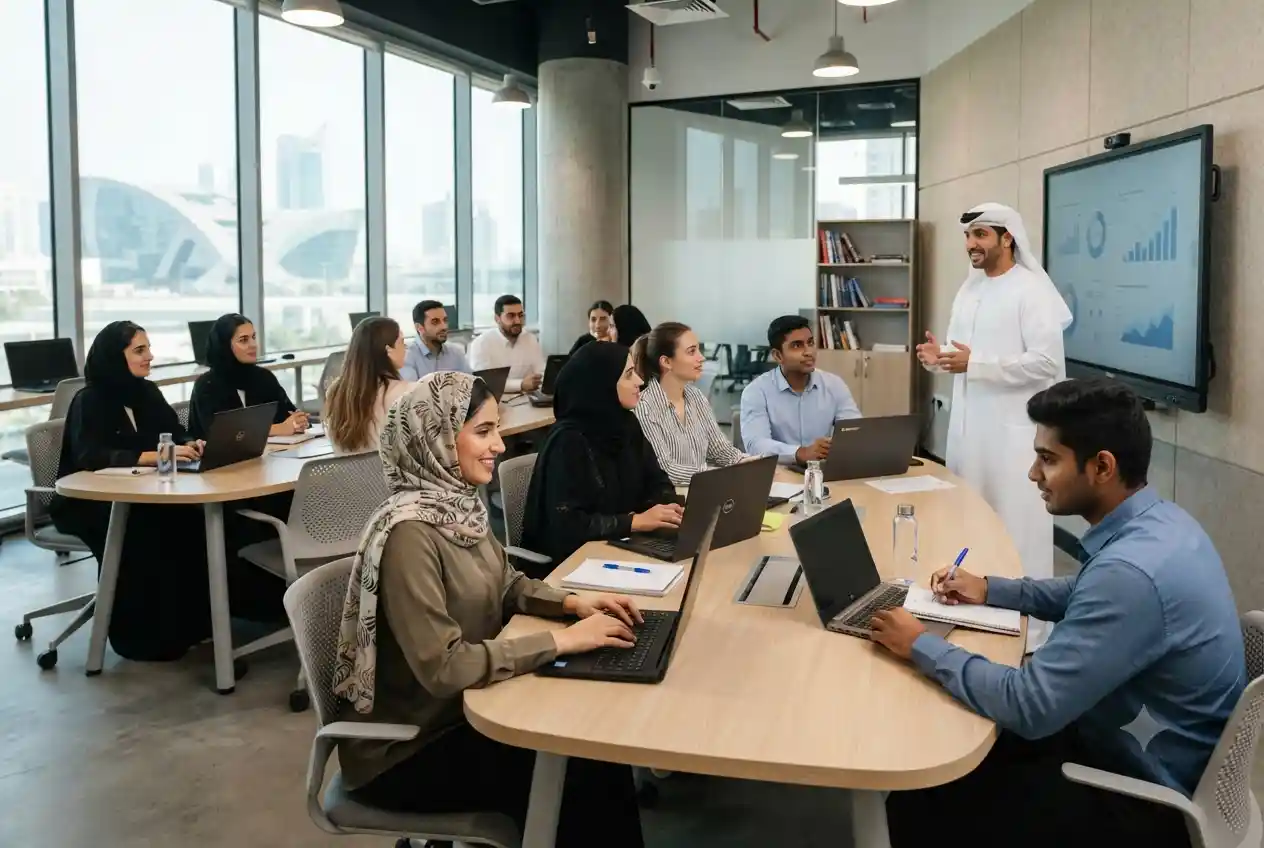
Education in the UAE covers a broad system of schools, higher education institutions, vocational programmes, training centres and lifelong learning opportunities. For families, students and professionals, understanding how these different pathways fit together can make educational decisions easier and more practical.
The UAE has developed an education environment that includes government schools, private schools following different curricula, technical and vocational institutions, universities, training centres and online learning options. The country’s official education platform groups these areas into school education, higher education, technical and vocational education, eLearning, scholarships, lifelong learning and other related services.
Education is also changing rapidly. Technology, practical learning, artificial intelligence, digital skills and career-focused training are becoming increasingly relevant alongside traditional academic subjects. As a result, choosing the right educational pathway now requires families to consider both present needs and future opportunities.
What Does Education Mean in the UAE?
Education in the UAE includes formal and informal learning opportunities available at different stages of life. Children may begin with early childhood education before moving into kindergarten, primary and secondary school. After completing school, students can continue to universities, colleges, technical institutes or vocational programmes.
Adults can also participate in continuing education, professional training and online learning. This makes the UAE education system broader than the traditional school-to-university pathway.
The official UAE Government education portal identifies school education, higher education, technical and vocational education, lifelong learning, online training and internships among the country’s major education areas.
The UAE School Education System
School education generally covers the years from kindergarten through Grade 12. Students can study in government or private schools, with different curricula available across the private education sector.
The Ministry of Education provides services related to government-school registration, transfer certificates, educational certificate attestation and other school-related processes. In Abu Dhabi, Dubai and Sharjah, local education authorities also have important regulatory responsibilities.
This means parents should identify the relevant authority for their emirate when checking school regulations, admissions or inspection information.
Kindergarten and Early Learning
Early childhood education provides the foundation for later academic and personal development. At this stage, children begin developing language, communication, social interaction, early mathematical understanding and classroom habits.
Parents should look for an age-appropriate environment that combines structured learning with play, creativity, movement and social interaction. Early education should build curiosity and confidence rather than focus exclusively on formal academic performance.
Primary Education
Primary education introduces students to increasingly structured academic learning. Reading, writing, mathematics, science and other subjects become central to the curriculum.
This stage is also important for developing study habits. Children gradually learn how to complete assignments, manage time, ask questions and work independently.
Secondary Education
Secondary education prepares students for higher education, vocational training or future employment. At this stage, subject selection and examination pathways can become particularly important.
Parents and students should begin considering future goals before the final school years. University requirements, professional interests and preferred areas of study can influence which subjects and qualifications are most appropriate.
Government and Private Education
The UAE education sector includes both government and private schools. Private schools can offer different curricula, including international programmes, while government education follows the relevant national framework.
Parents comparing schools should consider more than curriculum alone. Factors such as inspection ratings, teaching quality, location, fees, facilities, student support, extracurricular activities and university preparation can all influence the overall experience.
The regulatory structure also varies by emirate. The UAE Government explains that the Ministry of Education shares school oversight responsibilities with local education authorities in Abu Dhabi, Dubai and Sharjah.
Choosing the Right Curriculum
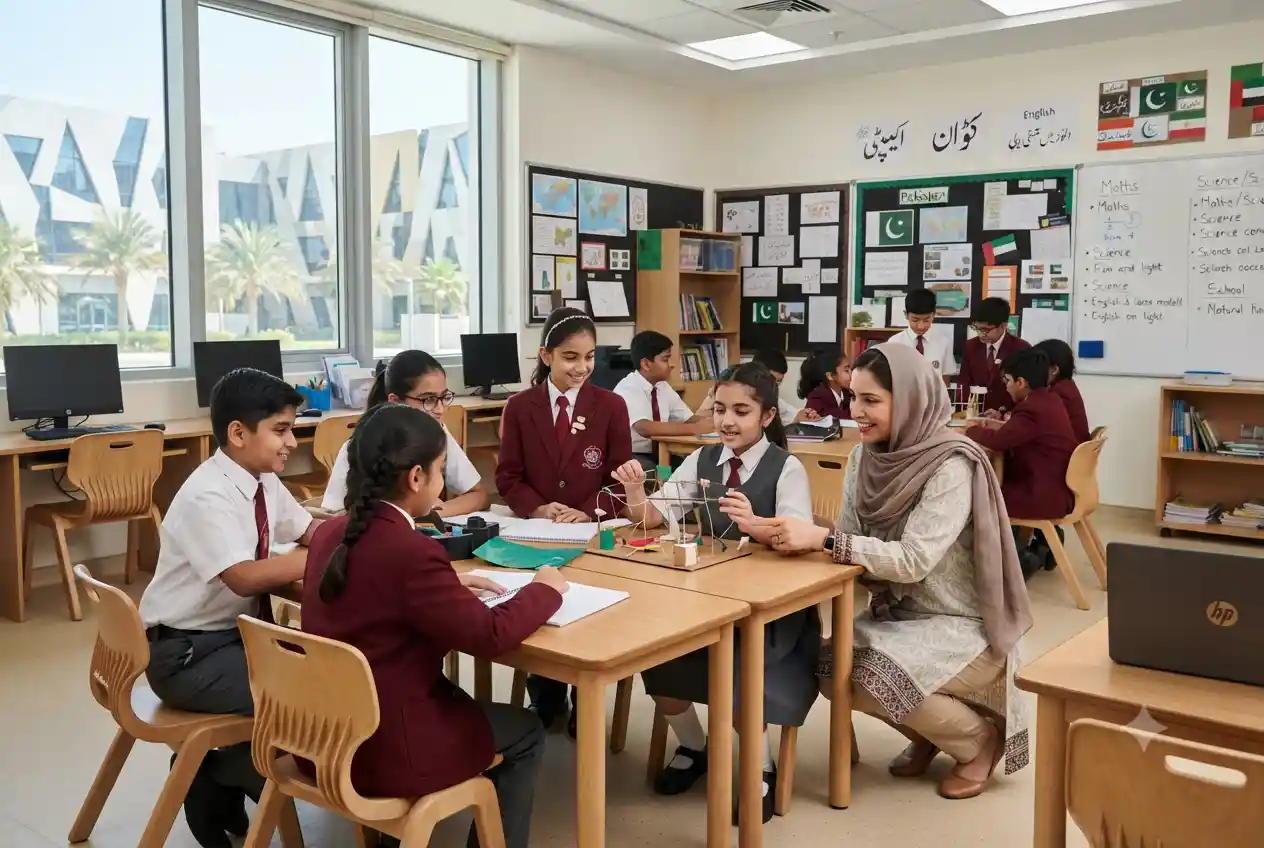
Curriculum choice can have a long-term effect on a student’s educational pathway. Families may consider Pakistani, British, American, International Baccalaureate, Indian or other curricula depending on the school and the student’s future plans.
There is no universally best curriculum for every student. The appropriate option depends on academic strengths, learning preferences, family circumstances and future university or career goals.
Parents should also consider whether a child may move to another country later. A curriculum that works well for the family’s current situation should also be evaluated in terms of transferability and future academic requirements.
Technology Is Changing Education
Technology has become an increasingly important part of modern education. Students use computers, digital platforms, educational applications and online resources for research, communication, collaboration and project work.
Technology can also make difficult concepts easier to understand. Simulations, interactive exercises and digital models allow students to explore subjects in ways that may not be possible through textbooks alone.
However, technology should support effective teaching rather than replace it. A strong learning environment combines digital tools with discussion, reading, writing, practical activities and direct interaction with teachers.
Students interested in technology-focused learning can also explore G TEC computer education as part of the broader digital-skills landscape.
STEM and Future-Focused Learning
Science, technology, engineering and mathematics have become important areas of modern education because they help students develop analytical and practical skills.
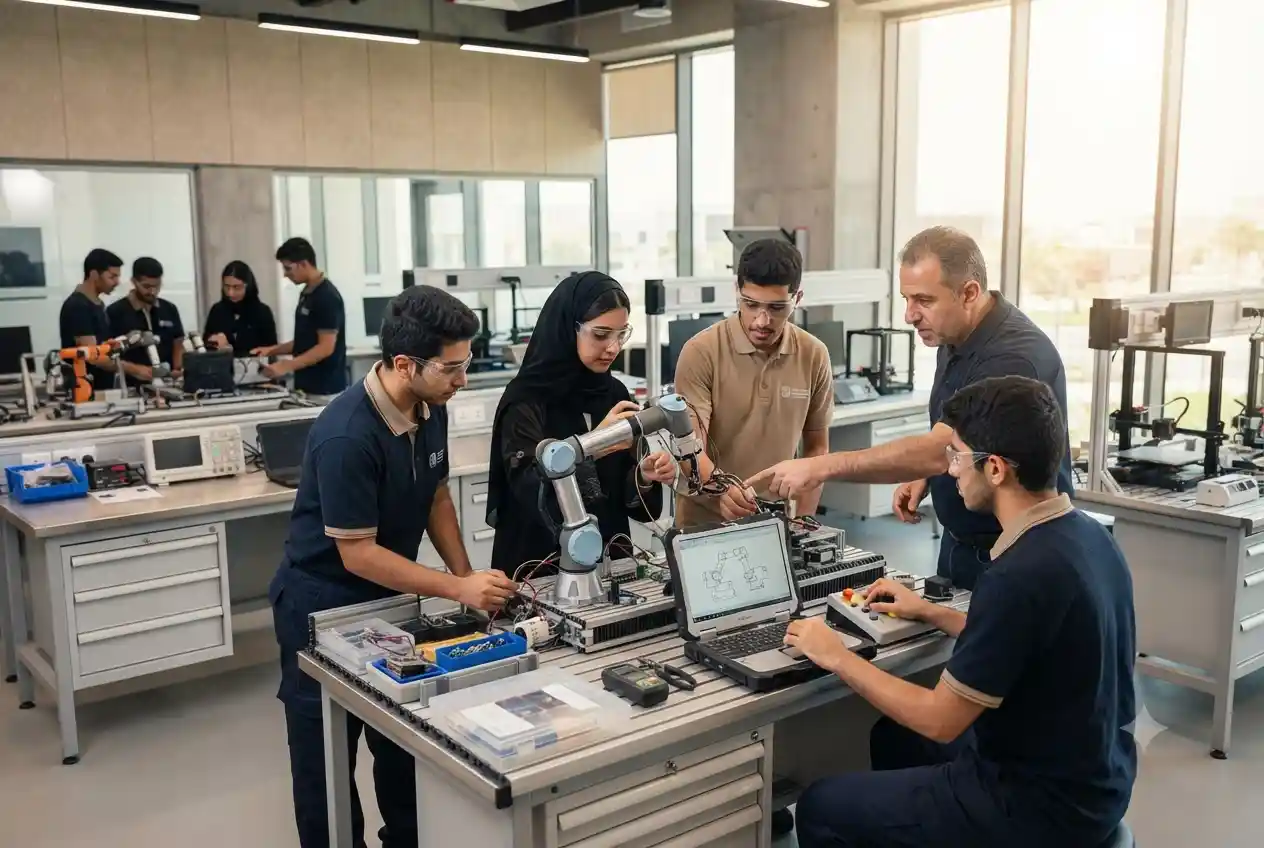
STEM programmes can include experiments, coding, robotics, engineering challenges, mathematics projects and digital design. These activities encourage students to investigate problems rather than simply memorise information.
Dubai has developed a growing interest in practical and technology-supported learning, making STEM education in Dubai an important part of the wider UAE education discussion.
STEM learning can also help students understand how different subjects connect. Mathematics may be used in engineering, programming can support robotics, and science can explain the principles behind technological systems.
Vocational and Technical Education
Not every student needs to follow a traditional academic pathway. Technical and vocational education can provide practical alternatives for learners interested in specific occupations and industries.
Vocational programmes can cover areas such as engineering, information technology, business, logistics, industrial technology and other applied disciplines.
The Abu Dhabi Vocational Education and Training Institute is one example of the UAE’s focus on applied and career-oriented learning. Such pathways can help students develop technical competencies alongside formal qualifications.
Vocational education should not be viewed as a lower form of education. It serves different objectives and can be particularly valuable for students who prefer practical learning or already have a clear interest in a technical career.
Continuing Education and Lifelong Learning
Education does not have to stop after graduation. Continuing education allows people to develop new skills at different stages of life.
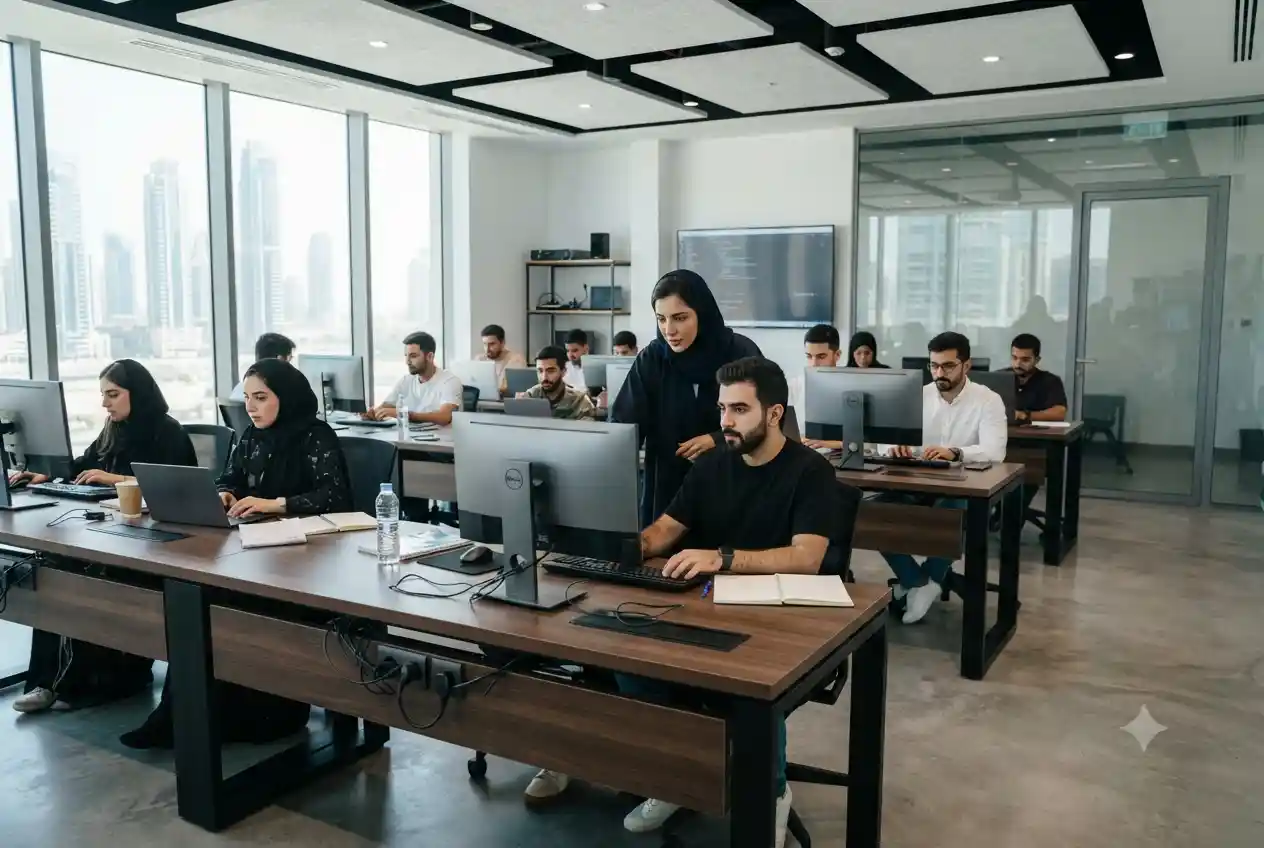
Professionals may take courses to improve their digital skills, management abilities, communication, languages or technical knowledge. Students can also participate in additional programmes outside their regular school curriculum.
Continuing education can be especially valuable in industries where technology and workplace practices change quickly. A professional may need to learn new software or processes even after years of experience.
Families in Sharjah researching supplementary education can also explore Continuing Education Center Sharjah CEC and its range of skills-based learning opportunities.
Big Education and the Importance of Educational Quality
The phrase big education can refer to large-scale approaches to education, major educational institutions or broader developments in the education sector. In the UAE context, educational development increasingly involves infrastructure, technology, teacher development and national strategies working together.
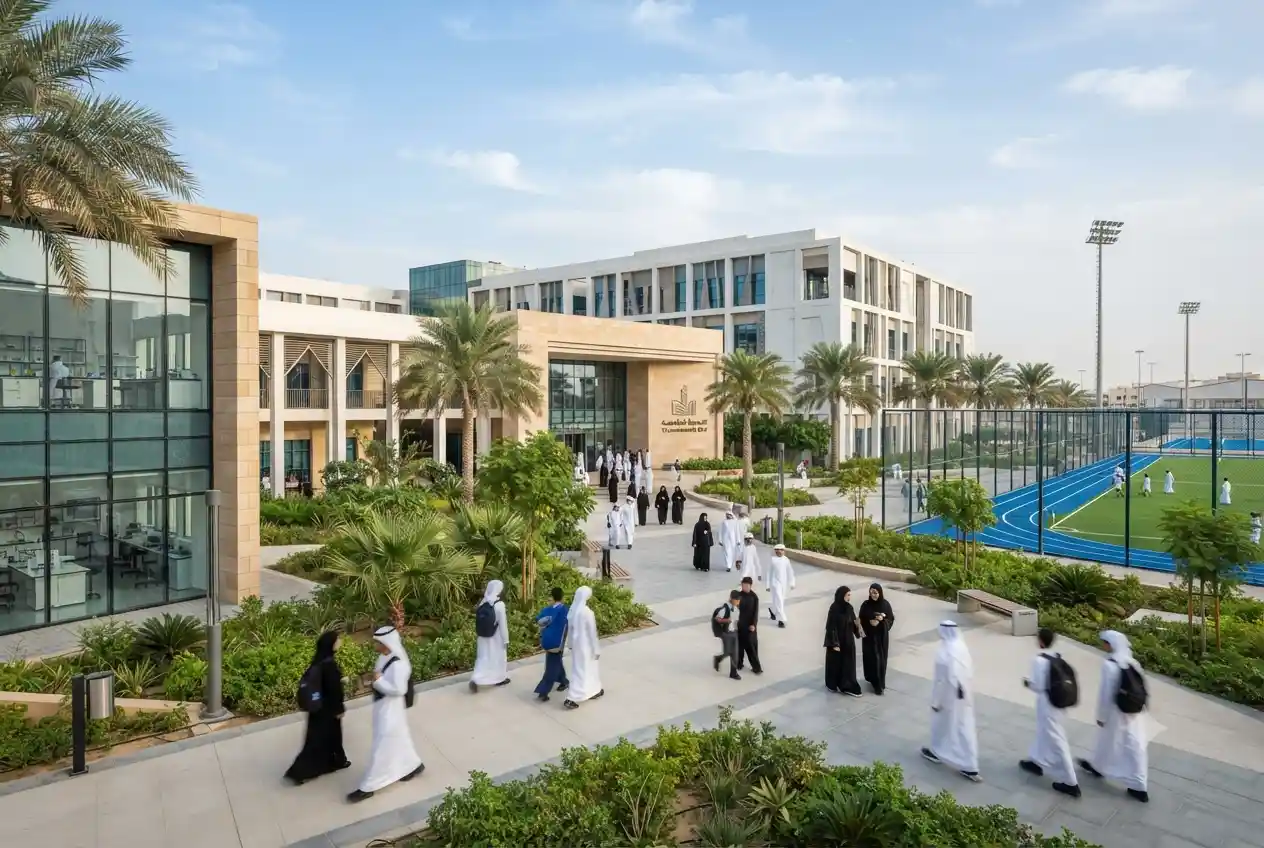
Large educational projects can provide modern laboratories, technology facilities, sports spaces and specialised learning environments. However, the quality of education ultimately depends on how effectively these resources are used.
A modern building alone does not guarantee strong learning outcomes. Teachers, curriculum design, student support and school leadership remain central to educational quality.
Why Teacher Quality Matters
Teachers have a major influence on the quality of a student’s education. Effective teachers do more than deliver information. They explain concepts, identify learning difficulties, encourage questions and help students apply knowledge.
Professional development is therefore an important part of a strong education system. Teachers need opportunities to improve their subject knowledge, understand new teaching approaches and adapt to changing technology.
Students also benefit when teachers create classrooms where mistakes are treated as opportunities for learning. This can encourage curiosity and help students become more confident problem-solvers.
Education and Practical Skills
Academic knowledge is important, but students also need practical skills that can help them use what they learn.
Project-based activities can provide this connection. Students might research a problem, develop a solution, create a prototype, analyse information or present their findings.
Practical learning can also improve communication and teamwork. Students learn how to divide responsibilities, explain their ideas, respond to feedback and adjust their approach when something does not work.
These skills can become valuable in higher education and employment regardless of the student’s chosen profession.
Education Pronunciation and Clear Communication
For learners developing English skills, the pronunciation of education is commonly given as “ed-yoo-KAY-shun” in standard English. The main stress falls on the third syllable, which is useful to remember when speaking in academic or professional situations.
Clear pronunciation is only one part of effective communication. Students should also develop vocabulary, listening skills, sentence structure and confidence when speaking.
Language skills can become particularly important in the UAE’s multicultural environment, where English is widely used in education, business and professional communication alongside Arabic and many other languages.
The Role of the Ministry of Education
The Ministry of Education plays an important role in the UAE’s education system. Its current services include public-school admission, certificate services, transfer-related services and other education processes.
The Ministry also provides information and services for students, families and educational institutions. However, education regulation is not handled by one authority in every emirate, so families should check the relevant local regulator where applicable.
For official information, parents and students should use the UAE Ministry of Education website when checking current federal education services, requirements and policies.
Education for International Families
The UAE’s international population means that many families need to make education decisions while considering previous schooling in another country.
Students transferring from overseas may need school records, transfer documentation or certificate equivalency depending on their circumstances and educational pathway. Parents should check requirements before moving a child between curricula or education systems.
International families should also consider whether the chosen school provides a curriculum compatible with their child’s future plans. If the family expects to relocate again, curriculum continuity can become an important consideration.
Education and Career Planning
Education becomes more valuable when students understand how their learning connects with future opportunities. Career planning does not mean choosing a profession at a very young age, but students can gradually explore subjects and activities that interest them.
A student who enjoys science may explore laboratory work or engineering. Someone interested in technology may investigate coding, computer education or data-related subjects. A learner who prefers communication and creativity may consider media, business, design or languages.
Schools, training centres and extracurricular programmes can help students discover these interests before making major academic decisions.
How Parents Can Support Better Education
Parents can contribute to a child’s education by creating a supportive learning environment at home. Regular reading, organised study time, healthy routines and open communication can all help students develop consistent habits.
Parents should also avoid focusing exclusively on grades. Academic performance matters, but children also need confidence, curiosity, communication skills and the ability to solve problems independently.
Regular communication with teachers can help parents understand where additional support may be useful. If a child struggles with a subject, early intervention is often more effective than waiting until examinations approach.
How Students Can Take Responsibility for Learning
Students gradually need to become active participants in their own education. Setting goals, organising assignments and reviewing mistakes can help them develop independence.
Older students should also learn how to evaluate information. With large amounts of content available online, the ability to identify reliable sources and distinguish evidence from unsupported claims is increasingly important.
Students can strengthen this skill by comparing credible sources, asking questions and checking information before accepting it as fact.
The Future of Education in the UAE
The future of education in the UAE is likely to involve greater integration of technology, practical learning and skills development. Artificial intelligence, digital platforms, robotics and other technologies are already influencing how students learn and how workplaces operate.
At the same time, fundamental educational skills will remain important. Reading, mathematics, communication, scientific reasoning and critical thinking provide the foundation on which new technologies can be used effectively.
The strongest education systems are therefore likely to combine traditional academic foundations with modern tools and practical experiences.
Choosing the Right Educational Pathway
Families should begin by identifying the student’s current needs and future goals. The right choice may be a conventional school, an international curriculum, a vocational programme, supplementary training or a combination of different learning opportunities.
Parents should compare costs, curriculum, location, facilities, academic support, inspection information and progression opportunities before making a decision.
Students should also have a voice in the process, particularly as they become older. Understanding their interests and strengths can help families choose an educational pathway that is both realistic and motivating.
Final Thoughts
Education in the UAE is a broad and evolving system that includes schools, universities, vocational institutions, training centres, technology-based learning and lifelong education. This diversity gives families and students multiple pathways to develop knowledge and practical skills.
The most effective approach is not necessarily to choose the most expensive school or the newest technology. Instead, students benefit from strong teaching, relevant curricula, supportive environments and opportunities to apply what they learn.
As the UAE continues to develop its education sector, academic knowledge will remain important, but future success will also depend on creativity, communication, digital literacy, critical thinking and practical problem-solving. Families who consider these factors can make more informed education decisions and help students build a stronger foundation for the future.