



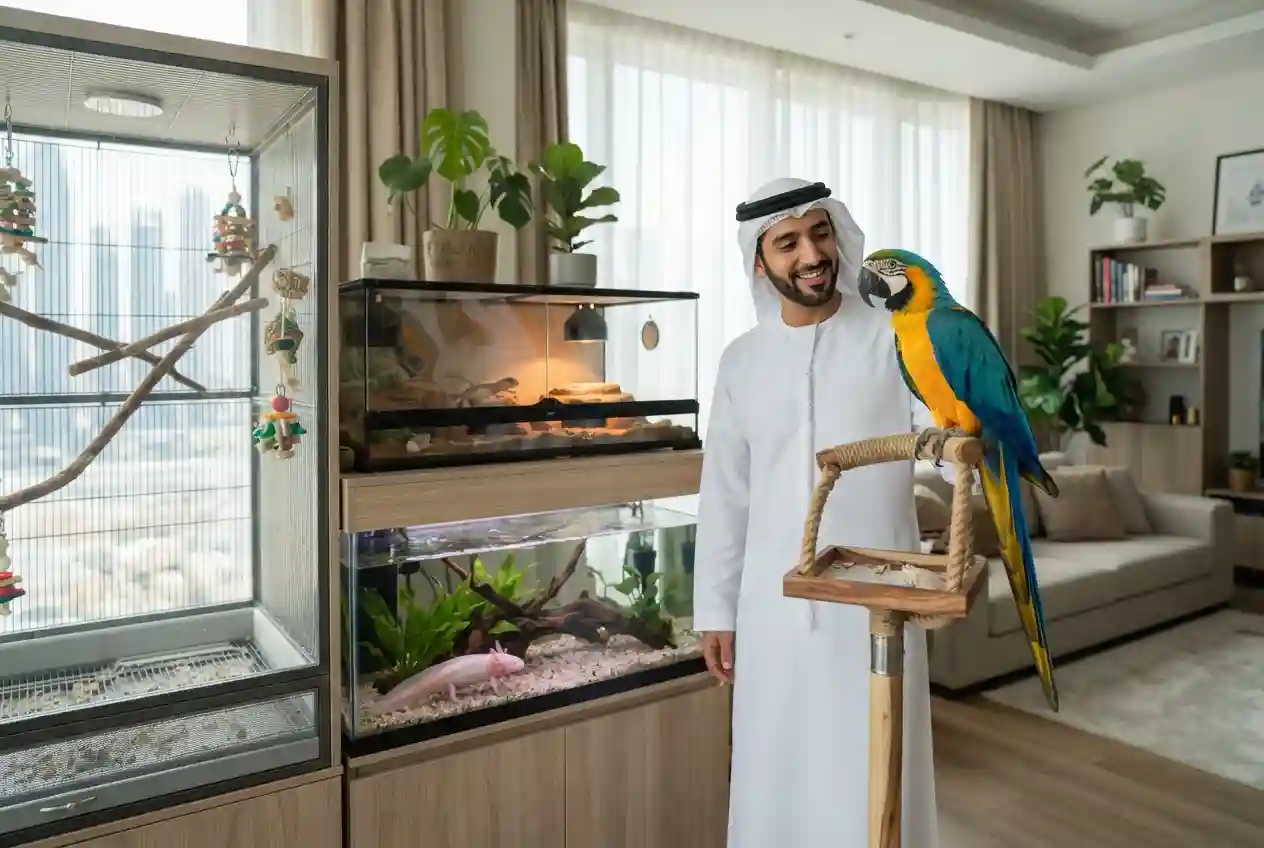
Exotic pets can attract attention because of their unusual appearance, behaviour or rarity. From reptiles and birds to small mammals and other non-traditional companion animals, people searching for unique pets may encounter a wide variety of species advertised online or through specialist sellers in the UAE.
However, owning an unusual animal is very different from owning a conventional household pet. Some species have complex environmental, dietary and veterinary requirements, while others may be restricted or prohibited for private ownership.
Before searching for an axolotl pet, capybara pet, iguana pet, pet snakes or a tortoise pet, prospective owners should first establish whether the animal is legally permitted, whether its needs can realistically be met, and whether appropriate veterinary care is available.
What Are Exotic Pets?
The term exotic pets generally refers to animals that are not traditionally domesticated companion animals such as dogs and cats. The category can include certain reptiles, amphibians, birds, fish, small mammals and other unusual species.
Not every unusual animal has the same legal status. Some species may be permitted under specific conditions, while others can be subject to strict restrictions because of their potential danger, conservation status or welfare requirements.
This is why potential owners should research the exact species rather than assuming that an animal is legal simply because it is being advertised for sale.
Are Exotic Pets Legal in the UAE?
One of the most important considerations before obtaining an exotic animal is its legal status. UAE legislation restricts private ownership of certain wild, dangerous and exotic animals, with specific categories limited to authorised facilities.
An online listing is not evidence that an animal can legally be purchased, imported, transported or kept as a private pet. Anyone considering an unusual species should verify the applicable UAE requirements through official sources before proceeding.
This is particularly important for wild animals and species that can become dangerous or require specialist care as they mature.
For current official information, prospective owners should consult the UAE Government’s animal welfare information before acquiring an unusual animal.
Why Do People Choose Exotic Pets?
Some people are attracted to exotic animals because they want an alternative to traditional pets. Others have a genuine interest in a particular species and are prepared to learn about its natural behaviour and specialist care.
However, appearance should never be the main reason for choosing an animal. A species that looks fascinating in photographs may have demanding habitat, diet, temperature or social requirements.
Potential owners should research the animal’s adult size and needs rather than basing their decision on how manageable it appears when young.
Axolotl Pet: What Beginners Should Know
The axolotl pet has become popular among people interested in unusual aquatic animals. Its distinctive appearance makes it an appealing subject for aquarium enthusiasts.
Axolotls are aquatic amphibians with specialised environmental requirements. Water quality, temperature, filtration, tank conditions and appropriate nutrition all need careful attention.
They should not be treated like decorative aquarium fish. Before acquiring one, prospective owners should research the species’ specific husbandry requirements and identify suitable veterinary or specialist support.
It is also important to verify whether keeping the species is permitted under the applicable local rules before making any purchase.
Capybara Pet: Is It Practical?
The idea of keeping a capybara pet may seem appealing because capybaras are often portrayed online as calm and friendly animals. In reality, they are large social animals with specialised needs that make private ownership challenging.
Capybaras require substantial space, appropriate environmental conditions and social considerations. Their size and behaviour should be understood before anyone considers keeping one.
People should also distinguish between internet videos and real-life animal care. An animal appearing comfortable around humans in a video does not mean it is suitable for a private household.
Because legal requirements can apply to unusual species, prospective owners should verify the animal’s status before considering acquisition.
Iguana Pet: Understanding the Commitment
An iguana pet can require considerably more care than a new owner might expect. Iguanas can grow much larger than they appear when young and require an appropriate enclosure, temperature management, lighting, humidity and a suitable diet.
Their long-term needs should be considered before purchase. An enclosure suitable for a juvenile may eventually become inadequate as the animal grows.
Owners should also research handling and behaviour. Reptiles can become stressed by inappropriate handling, and adult animals may be significantly stronger and more difficult to manage than juveniles.
Pet Snakes: What to Consider
Pet snakes require specialist knowledge of housing, temperature, humidity, feeding and handling. Different snake species can have very different adult sizes and care requirements.
Potential owners should never select a snake simply because it is small or visually attractive. Research the species’ adult size, enclosure requirements, diet and temperament first.
Feeding is another consideration. Some snakes require prey-based diets, which means owners need to be comfortable with the practical responsibilities involved.
Legal restrictions are particularly important when considering any snake species. Verify the status of the exact species under current UAE regulations before acquiring one.
Tortoise Pet: More Than a Slow-Moving Companion
A tortoise pet may appear easy to care for because tortoises are relatively quiet and do not require daily walks. However, they can have long lifespans and specific habitat, nutrition, temperature and lighting requirements.
Some species can grow considerably larger than expected. Owners need to plan for the animal’s needs throughout its life rather than choosing an enclosure based on its juvenile size.
Diet is also species-specific. Providing inappropriate food can contribute to health problems, so owners should research the nutritional requirements of the exact species.
Hamster Pet: A Smaller Alternative
A hamster pet may be more practical for some households than a large exotic animal, but small size does not mean low responsibility.
Hamsters need suitable housing, bedding, food, water, enrichment and opportunities for appropriate activity. Their natural activity patterns should also be considered when deciding whether they are a good fit for the household.
Children should be supervised when handling small animals because hamsters can become frightened or injured if handled incorrectly.
Pet Parrot: Intelligence and Social Needs
A pet parrot can be highly intelligent and engaging, but parrots are not low-maintenance pets. Depending on the species, they may require significant social interaction, mental stimulation, appropriate nutrition and specialist veterinary care.
Noise is another factor. Some parrots can be loud, which may be challenging in apartment buildings or households that require a quiet environment.
Potential owners should also consider lifespan. Some parrot species can live for many years, making ownership a substantial long-term commitment.
Budgies as Pets
Budgies as pets can be appealing to households looking for a smaller bird. Their compact size and social nature make them popular companion birds.
Nevertheless, budgies still need appropriate cage space, enrichment, nutrition, exercise opportunities and social interaction. The cage should be large enough to allow comfortable movement and should contain suitable perches and enrichment items.
Owners should also research avian veterinary care before bringing a bird home. Birds can conceal signs of illness, making regular observation particularly important.
Animals to Have as Pets: How to Choose Responsibly
Searching for animals to have as pets can produce an enormous list of possibilities. Instead of starting with the most unusual species, begin by assessing your household.
Consider the following:
- How much space is available?
- How much time can you dedicate to daily care?
- Can you afford specialist veterinary treatment?
- Are you prepared for the animal’s adult size?
- Does the species require a specific temperature or habitat?
- What type of food does it need?
- How long can the animal live?
- Is the species legally permitted for private ownership?
- Are suitable veterinary services available?
- Who will care for the animal when you travel?
The answers can quickly eliminate species that are unsuitable for your circumstances.
Exotic Pet Care Is Highly Species-Specific
One of the biggest mistakes new exotic-pet owners make is assuming that general pet-care advice applies to every species.
A reptile may require carefully controlled temperature and humidity, while an amphibian may depend heavily on water quality. Birds require appropriate enrichment and social interaction, while some mammals may need considerable space and companionship.
Even animals within the same broad category can have very different needs. For this reason, research should always focus on the exact species.
Housing Exotic Animals in the UAE
The UAE climate can create additional challenges for some exotic animals. Owners should not assume that an animal naturally suited to a hot region will automatically thrive in a UAE home, nor that an air-conditioned room solves every environmental requirement.
Some species need carefully controlled humidity, temperature gradients, lighting or specialised habitats. Others may be sensitive to sudden environmental changes.
Before bringing an animal home, prepare the enclosure and test the relevant environmental conditions. Do not wait until after purchase to discover that the required setup is unavailable or impractical.
Veterinary Care for Exotic Pets
Not every veterinary clinic treats every species. This makes access to appropriate professional care an important factor when choosing an exotic animal.
Before acquiring a non-traditional pet, identify whether a suitably qualified veterinarian is available for that species in your area. This is particularly important because unusual animals may require specialist diagnostic equipment, treatment or expertise.
Owners should also establish a plan for routine health checks and emergencies.
Buying Exotic Pets Online
Online marketplaces and social media can make unusual animals appear readily available. However, convenience can hide serious risks.
A photograph cannot confirm an animal’s health, legal status, origin or welfare conditions. Prospective owners should verify the seller, documentation and applicable regulations before proceeding.
Never assume that an animal is legal simply because several sellers appear to offer it. If a listing involves an unusual wild or exotic species, verify the legal requirements through official channels.
Our guide to pets for sale provides broader advice about evaluating pet sellers and making responsible purchasing decisions in the UAE.
Why Exotic Pets Are Sometimes Rehomed
Some exotic animals are rehomed because owners underestimated their size, lifespan, cost or care requirements. Others may become difficult to manage as they mature.
This is one reason prospective owners should research the adult animal rather than the juvenile version shown in a listing.
Rehoming can also create additional challenges because specialist animals may have fewer suitable homes available. Choosing carefully at the beginning can help reduce the likelihood of an animal needing another home later.
Exotic Pets and Animal Welfare
Responsible ownership means putting the animal’s welfare ahead of novelty or convenience. An animal should have appropriate food, shelter, enrichment, healthcare and opportunities to express normal behaviours.
Owners should also understand that wild animals do not become domesticated simply because they are raised around humans. A species may tolerate people without being suitable for life as a household companion.
Where an animal’s needs cannot realistically be met in a private home, choosing a conventional companion animal may be the more responsible decision.
Exotic Pets vs Traditional Pets
Dogs and cats have been domesticated for generations and are generally easier for households to understand in terms of basic companion-animal care. Exotic species can require considerably more specialised knowledge.
This does not mean that every exotic animal is unsuitable. It means prospective owners should match their experience, resources and environment to the exact species.
People who want animal companionship but are uncertain about specialist care can also consider adoption. Our guide to pet adoption near me explains how UAE residents can approach responsible pet adoption.
Common Mistakes With Exotic Pets
Several mistakes can be avoided through research and preparation.
- Buying an animal before researching its adult size.
- Assuming every advertised species is legal to own.
- Using generic housing that does not meet species-specific requirements.
- Underestimating specialist veterinary costs.
- Choosing an animal because it is fashionable online.
- Ignoring social or environmental requirements.
- Failing to plan for long lifespans.
- Buying from an unverified seller.
- Releasing an unwanted animal into the environment.
Responsible ownership starts with avoiding these problems before the animal enters the household.
Frequently Asked Questions About Exotic Pets
What are exotic pets?
Exotic pets are generally non-traditional companion animals, including certain reptiles, amphibians, birds, fish and mammals. The exact category varies depending on context and regulations.
Can I own exotic pets in the UAE?
It depends on the exact species. UAE law restricts private ownership of certain wild, dangerous and exotic animals. Always verify the current legal requirements before acquiring an unusual animal.
Is an axolotl a good beginner pet?
Axolotls have specialised aquatic requirements, including appropriate water quality and temperature. They should not be treated as simple decorative aquarium animals. Research their care needs carefully before considering one.
Can a capybara be kept as a household pet?
Capybaras are large social animals with significant environmental and space requirements. Their legal status and suitability for private ownership should be verified before considering one.
Are hamsters easier to care for than reptiles?
Hamsters can be suitable for some households, but they still require species-appropriate housing, nutrition, enrichment and veterinary care. Care requirements differ substantially between species.
What should I check before buying an exotic pet?
Check the exact species’ legal status, adult size, habitat, diet, lifespan, behaviour, veterinary requirements and the availability of appropriate care in your area.
Summary
Exotic pets can be fascinating animals, but unusual appearance should never be confused with suitability as a household companion. Before considering an axolotl, capybara, iguana, snake, tortoise, hamster or parrot, research the exact species and understand its long-term requirements.
For UAE residents, legal compliance is equally important. An animal being advertised online does not mean that private ownership is permitted. Verify current regulations, prepare an appropriate environment and make sure specialist veterinary care is realistically accessible.
The most responsible pet choice is the one whose physical, behavioural and environmental needs you can consistently meet throughout its life.