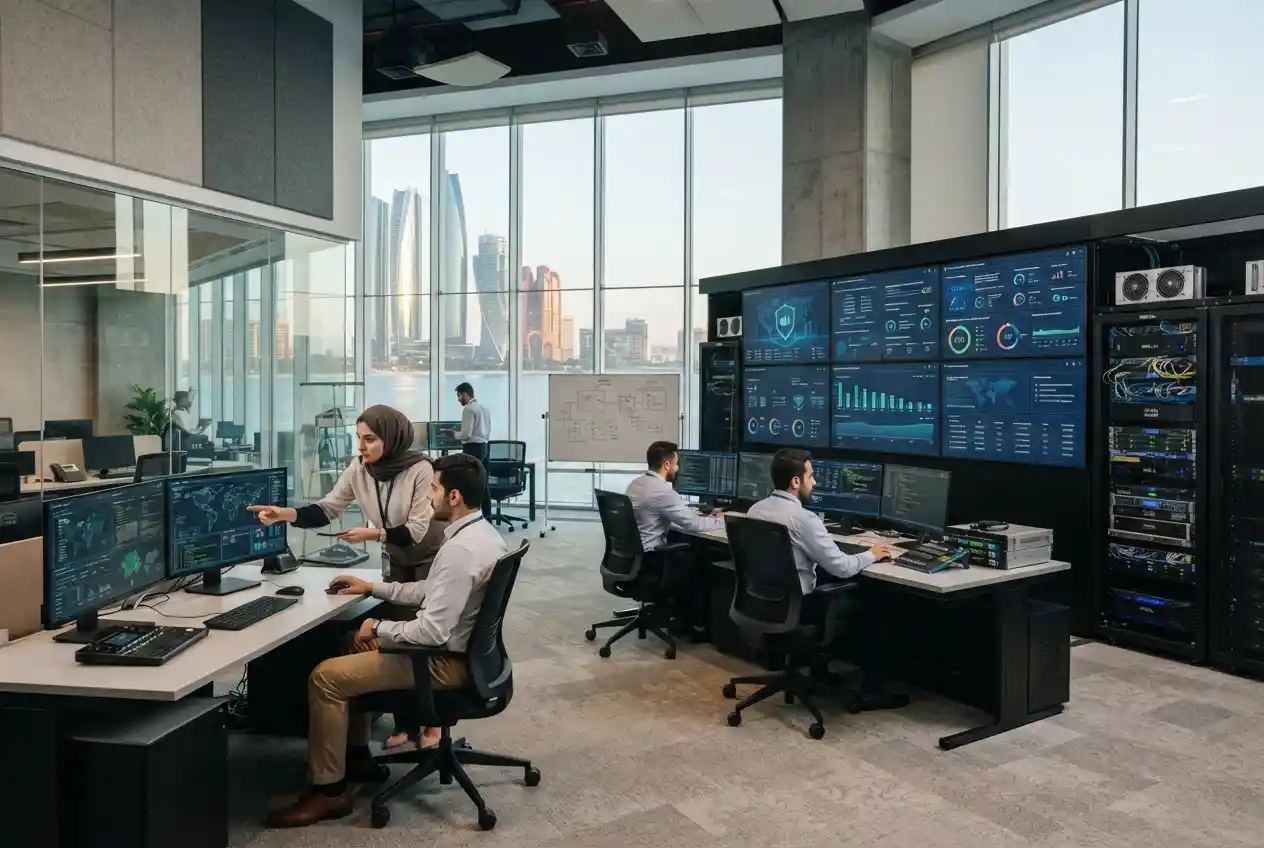

Intelligent Business Technologies LLC is a Dubai-based technology and outsourcing company serving organizations across the UAE and wider international markets. Known as IBT, the company positions itself around digital transformation, technology services, outsourcing, infrastructure management, and business process solutions.
Modern businesses increasingly need technology partners that can support more than a single IT function. Networks, cloud platforms, cybersecurity, data centers, business applications, technical support, and outsourced processes often need to operate together. This creates demand for providers capable of managing technology across its full lifecycle.
According to IBT’s published corporate information, Intelligent Business Technologies LLC and IBT Global Call Centre Services LLC operate under the IBT brand, providing technology and outsourcing services from ideation through execution. The company says it serves enterprise clients and offers customized solutions across the digital value chain.
What Is Intelligent Business Technologies LLC?
Intelligent Business Technologies LLC is an information technology and outsourcing company headquartered in Dubai. Its published profile places the business within the IT and software-services sector, with capabilities spanning technology solutions and business process outsourcing.
IBT’s corporate overview describes the company as a technology and outsourcing organization providing end-to-end services. Its technology portfolio includes infrastructure, telecommunications, networking, Microsoft solutions, data centers, backup and disaster recovery, virtualization, professional services, and remote infrastructure management.
The company also operates in business process outsourcing, including IT helpdesk outsourcing and network and telecommunications management outsourcing. This combination gives IBT a position that connects conventional IT services with broader operational outsourcing.
Why Intelligent Business Technologies Matters in the UAE
Dubai has developed a highly connected business environment where organizations increasingly rely on technology for communication, customer service, data management, operations, and business continuity.
For companies with complex technology environments, managing every IT function internally can require substantial staff, infrastructure, and specialist expertise. Outsourcing selected technology functions can provide access to external technical resources while allowing internal teams to focus on core business activities.
This is particularly relevant for medium-sized and enterprise organizations operating multiple offices, applications, networks, and technology platforms.
IT Infrastructure Solutions
IT infrastructure forms the foundation of a company’s digital operations. It can include servers, storage systems, networks, connectivity, endpoints, operating systems, and data-center resources.
IBT identifies infrastructure solutions among its technology offerings. Infrastructure services can help businesses design, implement, monitor, and maintain the technical systems required to support daily operations.
A properly designed infrastructure should consider current workloads as well as future requirements. Businesses need enough capacity for expected growth without creating unnecessary complexity or excessive costs.
Network Solutions
Business networks connect employees, applications, devices, servers, and communication systems. A reliable network is essential for cloud applications, internet access, file sharing, voice communication, video conferencing, and many other business functions.
IBT’s published technology portfolio includes network solutions and remote infrastructure management. These services can involve monitoring network performance, identifying technical problems, and supporting the ongoing operation of business-critical infrastructure.
Network management is increasingly important as organizations add remote employees, cloud services, wireless devices, and connected business applications.
Managed IT Services
Managed IT services provide organizations with ongoing technical support and monitoring rather than relying exclusively on occasional assistance. This approach can be useful when businesses need continuous oversight of their technology environment.
IBT publishes information about IT annual maintenance contract services in Dubai, including 24/7 manager and engineer support, hardware and software maintenance, cybersecurity, onsite support, and server monitoring.
For businesses considering managed services, the most important factor is clarity around responsibilities. Service agreements should define what systems are monitored, how incidents are handled, expected response times, maintenance responsibilities, and escalation procedures.
Cybersecurity and IT Operations
Cybersecurity is an essential part of modern IT management. Businesses need to protect systems from unauthorized access, malware, phishing, credential theft, data loss, and other security threats.
Security should be integrated into infrastructure management rather than treated as a separate activity. Network monitoring, endpoint security, access controls, software updates, backups, and employee awareness can work together as layers of protection.
IBT’s IT maintenance information specifically identifies cybersecurity as part of its service offering, alongside infrastructure and technical support.
Microsoft Technology Solutions
Many organizations use Microsoft technologies for productivity, communication, identity management, cloud services, and business applications. Managing these environments requires knowledge of both individual products and how they interact.
IBT identifies a Microsoft Solutions Group within its published technology portfolio. Microsoft environments can include productivity applications, cloud services, identity platforms, collaboration tools, endpoint management, and security technologies.
For businesses, effective management involves configuring permissions, maintaining security, supporting users, monitoring systems, and ensuring that applications are properly integrated.
Data Center Solutions
Data centers remain important for organizations that operate applications, databases, storage, and other critical computing resources. Although cloud computing has changed infrastructure strategies, many businesses continue to use dedicated or hybrid environments.
Data-center solutions can involve servers, storage, networking, power management, cooling, monitoring, security, backup, and disaster-recovery infrastructure.
Businesses should design these environments around availability requirements. Systems supporting critical business functions may require redundancy and documented recovery procedures.
Backup and Disaster Recovery
Data backup is a fundamental part of business continuity. Companies should know which information is critical, how frequently it should be backed up, where backups are stored, and how quickly systems need to be restored.
IBT lists data backup and disaster recovery among its technology solutions. A well-designed recovery strategy can help organizations respond more effectively to hardware failures, software problems, cyber incidents, accidental deletion, or other disruptions.
Backup systems should be tested regularly. Restoration testing provides greater confidence that protected data can actually be recovered when required.
Virtualization Technology
Virtualization allows physical computing resources to host multiple virtual environments. This can improve infrastructure utilization and provide organizations with greater flexibility when deploying servers and applications.
Virtualized environments can also support backup, disaster recovery, testing, and application deployment strategies. However, they require appropriate resource planning, monitoring, security, and maintenance.
As organizations increasingly operate hybrid infrastructure, virtualization can serve as one component connecting physical data-center resources with cloud environments.
Remote Infrastructure Management
Remote infrastructure management allows technology teams to monitor and manage systems without being physically present at every location.
This can be particularly useful for businesses operating multiple offices or geographically distributed infrastructure. Remote monitoring can provide visibility into network performance, server availability, system health, and security conditions.
IBT identifies remote infrastructure management among its technology capabilities. Effective remote management depends on secure access, reliable monitoring tools, defined escalation procedures, and skilled technical teams.
IT Helpdesk Outsourcing
An IT helpdesk provides employees with a structured channel for reporting technical problems and requesting assistance. Outsourcing the helpdesk can allow organizations to access dedicated support resources without building a large internal team.
Helpdesk services can cover issues involving user accounts, software, devices, connectivity, applications, and other everyday technology problems.
Businesses considering helpdesk outsourcing should establish service-level expectations, ticket priorities, response targets, escalation procedures, and reporting requirements.
Business Process Outsourcing
IBT’s business model extends beyond conventional IT infrastructure into business process outsourcing. BPO allows companies to delegate selected operational processes to an external service provider.
Depending on the organization, outsourced processes may include customer support, call-center operations, administrative work, technical support, or specialized business functions.
The advantage of outsourcing depends on the process being delegated and the quality of service management. Businesses should establish measurable service standards and maintain clear communication with the outsourcing provider.
Technology Outsourcing and Business Efficiency
Technology outsourcing can help organizations access specialist resources without maintaining every capability internally. This can be useful when a business needs expertise that would be expensive or difficult to build in-house.
For example, a company may maintain a small internal IT team while outsourcing network monitoring, helpdesk services, infrastructure maintenance, or cybersecurity support.
This hybrid model can allow internal employees to focus on strategic priorities while external specialists handle defined operational responsibilities.
How Businesses Should Evaluate an IT Outsourcing Provider
Choosing a technology outsourcing partner requires careful evaluation. Businesses should understand exactly which responsibilities will be transferred and how the provider will measure performance.
Important factors include:
- Technical expertise and certifications
- Experience with similar organizations
- Infrastructure monitoring capabilities
- Cybersecurity expertise
- Helpdesk and support availability
- Service-level agreements
- Backup and disaster-recovery capabilities
- Reporting and performance measurement
- Data protection and access controls
- Ability to scale services as the business grows
Businesses should also examine how the provider handles incidents. A clear escalation structure can make a significant difference when a critical system experiences an outage.
Digital Transformation Services
Digital transformation involves changing how businesses operate through technology. Cloud migration, automation, analytics, artificial intelligence, customer platforms, and digital workflows can all contribute to transformation.
IBT’s corporate overview describes its services as supporting digital transformation from ideation through execution. This type of approach can help organizations move from identifying an opportunity to implementing a practical technology solution.
Successful transformation should always be connected to a measurable objective. Businesses might aim to reduce operating costs, improve customer experience, increase productivity, strengthen security, or create new digital services.
Business Intelligence and Consulting
Business intelligence helps organizations use data to understand performance and make better decisions. Reporting platforms, dashboards, analytics systems, and integrated data sources can provide management with greater visibility into business operations.
Technology consulting can support this process by identifying relevant data sources and determining how information should be collected, organized, and presented.
Reliable data is particularly important as businesses begin incorporating artificial intelligence and predictive analytics into their operations.
Intelligent Business Technologies LLC and Emerging Technology
The technology landscape is changing rapidly as artificial intelligence, cloud computing, automation, cybersecurity, data analytics, and connected devices become more widely adopted.
For technology service providers, this creates an opportunity to combine established IT infrastructure with newer digital capabilities. AI applications, for example, still require secure networks, reliable data, cloud resources, identity management, and appropriate governance.
This means emerging technology does not eliminate traditional IT requirements. Instead, it builds on them.
Connecting IBT With the Wider UAE Technology Cluster
Information technology increasingly supports specialized technology sectors across the UAE. Environmental monitoring can depend on connected sensors and analytics, while solar-energy systems use digital monitoring and control platforms. Water-treatment facilities can similarly incorporate automation and networked equipment.
This makes IT infrastructure an important connecting layer across the wider technology ecosystem.
Readers researching related UAE technology businesses can also explore Emits Information Technology Solutions LLC for another perspective on integrated IT, communications, security, and technology solutions.
Why Technology Reliability Matters
As businesses become increasingly digital, technology reliability directly affects productivity. An unavailable server, network failure, cybersecurity incident, or cloud-service problem can interrupt important operations.
Monitoring and preventive maintenance can help identify issues before they become major disruptions. Disaster recovery and backup systems provide additional protection when failures do occur.
Organizations should therefore consider reliability as part of technology strategy rather than measuring IT only by acquisition cost.
Future Outlook for Intelligent Business Technologies
The future of business technology in the UAE is likely to involve deeper integration between IT infrastructure, cloud services, cybersecurity, artificial intelligence, automation, analytics, and outsourced operations.
Businesses will increasingly expect technology providers to support both operational reliability and digital innovation. This creates demand for partners that understand how different systems interact and can manage technology across its lifecycle.
Outsourcing may also continue to evolve as businesses delegate specialized functions while retaining strategic technology leadership internally.
Last Thoughts
Intelligent Business Technologies LLC is part of Dubai’s technology and outsourcing ecosystem, with published capabilities spanning infrastructure, networking, telecommunications, Microsoft solutions, data centers, backup and disaster recovery, virtualization, managed IT services, remote infrastructure management, and business process outsourcing.
For UAE businesses, the broader value of an integrated technology provider lies in connecting these capabilities with measurable business objectives. Reliable infrastructure, cybersecurity, support, data management, and digital transformation can work together to create a stronger technology foundation.
As organizations continue adopting cloud platforms, artificial intelligence, automation, and data-driven operations, dependable IT services will remain essential. Technology providers that can combine infrastructure management with strategic digital capabilities are well positioned to support businesses through this continuing transformation.